Mortgage Rate Forecast 2026: Preparing for Potential Increases of Up to 0.5%
As we navigate the ever-evolving economic landscape, one question weighs heavily on the minds of homeowners, potential buyers, and real estate investors alike: what does the future hold for mortgage rates? Specifically, the mortgage rate forecast for 2026 suggests a period of potential increases, with some experts predicting a rise of up to 0.5%. This isn’t a cause for panic, but rather an imperative for proactive planning and strategic financial management. Understanding these potential shifts is crucial for anyone looking to make informed decisions about their housing and financial future.
The housing market and mortgage rates are intrinsically linked, influenced by a myriad of global and domestic economic factors. From inflation and central bank policies to geopolitical events and employment figures, the forces at play are complex and interconnected. For 2026, the consensus among many economists points towards a continued, albeit perhaps slower, normalization of monetary policy, which could translate into higher borrowing costs. This article will delve deep into the factors driving the mortgage rate forecast, explore the implications of a potential 0.5% increase, and provide actionable strategies to help you prepare effectively.
Understanding the Current Economic Climate and its Impact on Mortgage Rates
To accurately assess the mortgage rate forecast for 2026, we must first understand the current economic environment. The past few years have been marked by unprecedented economic shifts. We’ve seen periods of ultra-low interest rates, aggressive quantitative easing, and more recently, a concerted effort by central banks, particularly the Federal Reserve, to combat stubborn inflation through rate hikes. These actions have a direct and significant impact on the cost of borrowing for consumers, including mortgage rates.
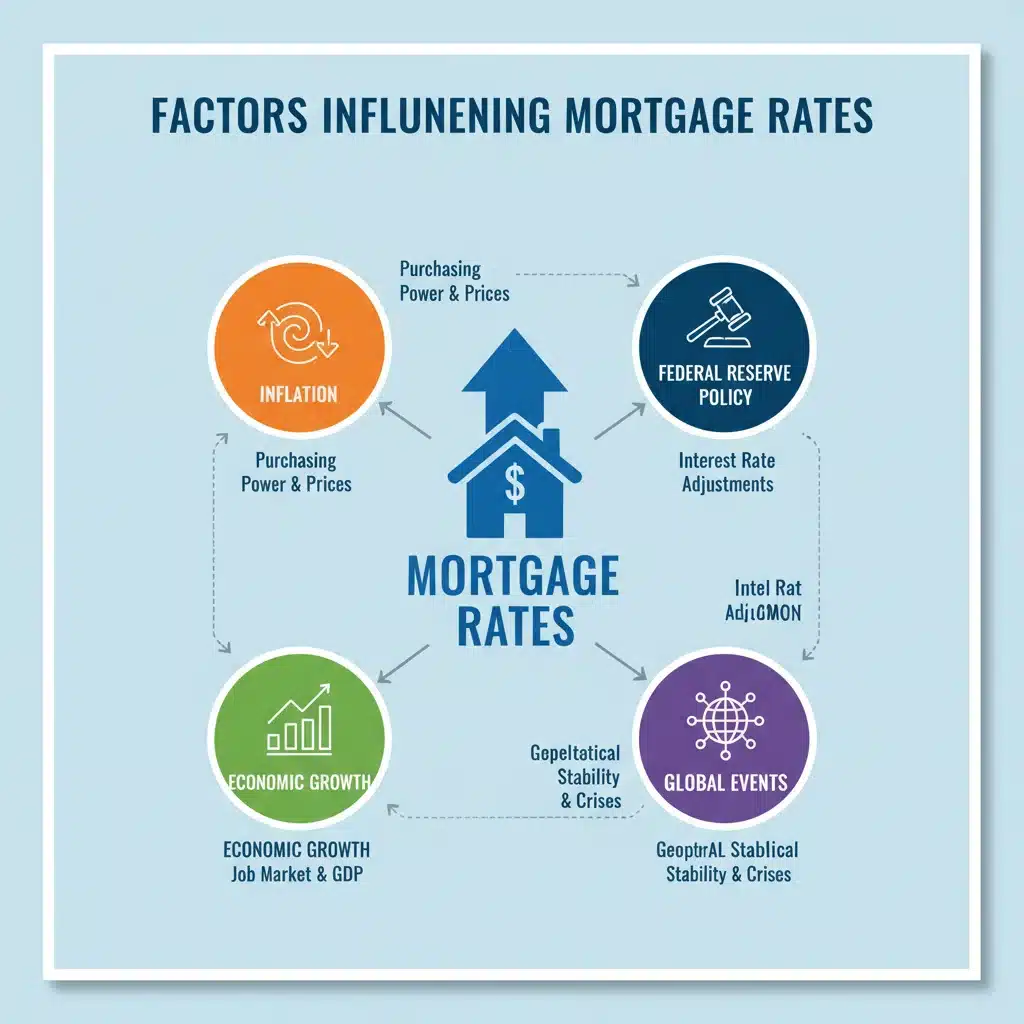
Inflation remains a key driver. When inflation is high, central banks typically raise their benchmark interest rates to cool down the economy and bring prices under control. While the direct federal funds rate doesn’t directly dictate mortgage rates, it heavily influences the yields on Treasury bonds, which in turn serve as a benchmark for long-term fixed-rate mortgages. As inflation shows signs of moderating but not entirely disappearing, the Federal Reserve’s stance on future rate adjustments will be paramount to the 2026 outlook. A sustained period of inflation above target levels would almost certainly necessitate further tightening, pushing mortgage rates higher.
The Federal Reserve’s Role and Future Policy
The Federal Reserve’s monetary policy is arguably the single most influential factor in the mortgage rate forecast. Their decisions on the federal funds rate, which is the overnight lending rate between banks, ripple through the entire financial system. When the Fed raises this rate, it becomes more expensive for banks to borrow money, and these increased costs are often passed on to consumers in the form of higher interest rates on various loans, including mortgages.
Looking ahead to 2026, the Fed’s actions will be guided by several key economic indicators: inflation, employment, and economic growth. If inflation proves more persistent than anticipated, or if the labor market remains exceptionally tight, the Fed might be compelled to maintain higher rates for longer, or even implement additional hikes. Conversely, a significant economic slowdown or a rapid decline in inflation could lead to rate cuts. The current sentiment, however, leans towards a cautious approach, with many analysts expecting rates to remain elevated, or even slightly increase, to ensure inflation is fully tamed. This cautious stance underpins the potential for a 0.5% increase in the mortgage rate forecast.
Key Factors Shaping the 2026 Mortgage Rate Forecast
Beyond the Federal Reserve, several other macroeconomic factors will play a crucial role in shaping the mortgage rate forecast for 2026. Understanding these elements provides a more comprehensive picture of the potential trajectory of borrowing costs.
- Inflation Trends: As discussed, inflation is a primary concern. If supply chain issues resurface, energy prices spike, or wage growth outpaces productivity, inflationary pressures could reignite, leading to further rate hikes.
- Economic Growth: A robust economy with strong GDP growth and low unemployment typically allows the Fed to maintain higher rates without stifling activity. However, a significant economic downturn could prompt the Fed to cut rates, providing some relief for mortgage borrowers.
- Global Economic Conditions: The global economy is interconnected. Events such as geopolitical conflicts, economic slowdowns in major trading partners, or shifts in international capital flows can impact U.S. bond yields and, consequently, mortgage rates.
- Housing Market Dynamics: The supply and demand balance within the housing market itself can indirectly influence mortgage rates. A highly competitive market with strong demand might sustain higher rates, while a cooling market could see some downward pressure if lenders need to incentivize buyers.
- Government Fiscal Policy: Government spending and borrowing can also affect interest rates. Large budget deficits can lead to increased Treasury bond issuance, potentially pushing up yields and, by extension, mortgage rates.
These factors are not static; they are constantly evolving and interacting, making precise long-term predictions challenging. However, the current trajectory and expert consensus point towards a scenario where rates could indeed see a modest increase, reinforcing the need to consider the mortgage rate forecast for 2026 carefully.
The Impact of a 0.5% Mortgage Rate Increase
A 0.5% increase in mortgage rates might seem small on paper, but its impact on monthly payments and overall affordability can be substantial, especially for larger loan amounts. Let’s break down what this could mean for various homeowners and prospective buyers.
For Prospective Homebuyers
For those planning to purchase a home in 2026, a 0.5% increase translates directly into higher monthly mortgage payments. For example, on a $400,000 30-year fixed-rate mortgage, a 0.5% increase could add approximately $100-$150 to your monthly payment, depending on the initial rate. Over the lifetime of the loan, this amounts to tens of thousands of dollars in additional interest paid. This increase can significantly impact affordability, potentially pushing some buyers out of their desired price range or forcing them to settle for smaller homes or less desirable locations.
It also affects borrowing power. Lenders assess your debt-to-income (DTI) ratio to determine how much you can afford to borrow. A higher interest rate means a larger monthly payment for the same loan amount, which can push your DTI ratio higher, potentially reducing the maximum loan amount you qualify for. This makes understanding the mortgage rate forecast even more critical for pre-approval planning.
For Existing Homeowners with Adjustable-Rate Mortgages (ARMs)
Existing homeowners with adjustable-rate mortgages are particularly vulnerable to rising rates. If your ARM is scheduled to adjust in 2026, a 0.5% increase could directly impact your monthly payments. While ARMs often come with caps on how much the rate can increase in a given period or over the lifetime of the loan, any upward adjustment will mean higher out-of-pocket expenses. Reviewing the terms of your ARM and understanding its adjustment schedule is paramount in light of the mortgage rate forecast.
Even if your ARM isn’t set to adjust in 2026, understanding the broader trend is important for future planning. You might consider refinancing into a fixed-rate mortgage before rates climb further, if it makes financial sense for your situation.
For Homeowners Considering Refinancing
For homeowners contemplating refinancing, a rising rate environment means less favorable terms. If you’re looking to lower your monthly payments, shorten your loan term, or tap into your home equity, waiting until 2026 could mean missing out on better rates. The window for advantageous refinancing might be closing as the mortgage rate forecast points upwards. Acting sooner rather than later could lock in a lower rate and save you money in the long run.

Strategies to Prepare for Potential Mortgage Rate Increases
Given the mortgage rate forecast for 2026, proactive preparation is not just advisable, it’s essential. Here are several strategies to help you navigate a rising rate environment and protect your financial well-being.
1. Improve Your Credit Score
A higher credit score is always beneficial when seeking a mortgage, but it becomes even more critical in a rising rate environment. Lenders offer the best rates to borrowers with excellent credit. Improving your credit score by paying bills on time, reducing debt, and checking for errors on your credit report can help you qualify for the most favorable terms available, potentially mitigating some of the impact of a general rate increase.
2. Save for a Larger Down Payment
A larger down payment reduces the amount you need to borrow, thereby lowering your monthly mortgage payment and the total interest paid over the life of the loan. In a scenario where rates are increasing, a substantial down payment can significantly offset the impact of higher interest rates, making homeownership more affordable. Aiming for 20% or more can also help you avoid private mortgage insurance (PMI).
3. Get Pre-Approved for a Mortgage Now
If you’re planning to buy a home in the near future, getting pre-approved for a mortgage now can lock in a rate for a certain period, typically 30 to 90 days. This can protect you from any immediate rate increases while you search for a home. Even if you don’t find a home within that timeframe, the pre-approval process gives you a clear understanding of what you can afford and the current rates available, which is invaluable information when considering the mortgage rate forecast.
4. Consider a Shorter Loan Term
While 30-year fixed-rate mortgages are common, a 15-year fixed-rate mortgage typically comes with a lower interest rate. Although the monthly payments will be higher, you’ll pay significantly less interest over the life of the loan and build equity faster. If you can afford the higher monthly payments, this can be an excellent strategy to save money in a rising rate environment.
5. Evaluate Refinancing Options (If Applicable)
For existing homeowners with higher interest rates or adjustable-rate mortgages, now might be the time to consider refinancing into a fixed-rate mortgage. If you can secure a lower fixed rate before the predicted increases in 2026, you can lock in your monthly payments and gain predictability, shielding yourself from future market volatility. Consult with a financial advisor or mortgage professional to determine if refinancing is the right move for your specific situation.
6. Explore Loan Programs and Assistance
Investigate various loan programs, especially those designed for first-time homebuyers or specific demographics. Government-backed loans like FHA, VA, or USDA loans often have more flexible qualification requirements and can sometimes offer more favorable rates or terms. Additionally, many states and local municipalities offer down payment assistance programs that can reduce your upfront costs, making homeownership more accessible even with higher interest rates.
Long-Term Outlook and Expert Opinions on the Mortgage Rate Forecast
While the immediate mortgage rate forecast for 2026 suggests potential increases, it’s important to consider the broader long-term outlook. Economic cycles are inherent, and what goes up often comes down, eventually. However, the days of historically low rates seen during the pandemic era are likely behind us for the foreseeable future.
Many economists anticipate that mortgage rates will stabilize at levels higher than the pre-pandemic average but lower than the peaks seen during aggressive inflation-fighting periods. This ‘new normal’ might settle somewhere in the mid-to-high single digits, depending on how inflation behaves and how central banks manage their balance sheets. The consensus for 2026 is a cautious upward trend, possibly a modest 0.5% rise, as the economy continues to digest past monetary policy actions and respond to global economic shifts.
What the Experts Are Saying
Leading financial institutions and real estate analysts generally agree on a few key points regarding the mortgage rate forecast for 2026:
- Continued Volatility: Expect some degree of fluctuation, driven by economic data releases and central bank commentary.
- Inflation as the Primary Driver: The path of inflation will dictate much of the Fed’s policy, directly impacting mortgage rates.
- Economic Resilience: A strong U.S. economy could allow rates to remain elevated without causing a recession.
- Supply and Demand: Housing inventory levels and buyer demand will continue to play a role in how sensitive the market is to rate changes.
While no one has a crystal ball, the prevailing sentiment suggests that borrowers should not expect a return to the ultra-low rates of recent years. Instead, preparing for a slightly higher rate environment, as indicated by the mortgage rate forecast, is the most prudent approach.
Conclusion: Navigating the 2026 Mortgage Rate Landscape
The mortgage rate forecast for 2026, with its potential for increases of up to 0.5%, presents both challenges and opportunities. For prospective homebuyers, it underscores the importance of financial preparedness, including improving credit scores, saving for larger down payments, and securing pre-approvals. For existing homeowners, especially those with ARMs or those considering refinancing, it highlights the urgency of reviewing current terms and exploring options to lock in favorable rates.
Ultimately, the key to successfully navigating this environment lies in being well-informed and proactive. Don’t wait for rates to shift before taking action. Consult with mortgage professionals, financial advisors, and real estate experts to tailor a strategy that aligns with your individual financial goals and circumstances. By understanding the factors influencing the mortgage rate forecast and implementing sound financial practices, you can confidently make decisions that secure your housing future, regardless of market fluctuations.
Remember, the housing market is dynamic. While predictions provide valuable guidance, flexibility and adaptability are your greatest assets. Stay informed, plan diligently, and position yourself to thrive in the evolving real estate landscape of 2026 and beyond.