2026 Federal Reserve Hike: What a 0.75% Mortgage Increase Means
Anúncios
Understanding the 2026 Federal Reserve Hike: What a 0.75% Mortgage Increase Means
The financial landscape is ever-evolving, and few entities hold as much sway over its direction as the Federal Reserve. As we look towards 2026, discussions around potential interest rate hikes are gaining traction, with a 0.75% increase being a significant point of consideration. For homeowners and prospective buyers, understanding the implications of such a move on their mortgages and the broader housing market is paramount. This comprehensive guide delves into what a 0.75% Federal Reserve interest rate hike could mean for your financial future, offering insights and strategies to navigate these potential changes.
The Federal Reserve’s Role and Interest Rate Mechanics
Before we dissect the impact of a 0.75% increase, it’s crucial to grasp the fundamental role of the Federal Reserve (often referred to as ‘the Fed’) and how its decisions ripple through the economy. The Federal Reserve acts as the central bank of the United States, tasked with a dual mandate: maximizing employment and maintaining price stability. To achieve these goals, the Fed utilizes several monetary policy tools, with adjusting the federal funds rate being one of the most prominent.
What is the Federal Funds Rate?
The federal funds rate is the target interest rate set by the Federal Open Market Committee (FOMC) for overnight borrowing between banks. While it’s not the rate consumers directly pay, it serves as a benchmark that influences other interest rates throughout the economy, including those for mortgages, auto loans, and credit cards. When the Fed raises the federal funds rate, it generally makes borrowing more expensive for banks, which then pass on these increased costs to consumers and businesses in the form of higher interest rates on various loans.
Why Does the Federal Reserve Hike Rates?
Interest rate hikes are typically employed to combat inflation. When the economy is growing too rapidly, and prices for goods and services are rising unsustainably, the Fed steps in to cool down economic activity. By making borrowing more expensive, it discourages spending and investment, thereby reducing demand and, consequently, inflationary pressures. Conversely, when the economy is sluggish, the Fed might lower rates to stimulate borrowing, spending, and investment. The anticipated 2026 Federal Reserve Mortgage hike, therefore, would likely be a response to projected inflationary trends or an overheating economy.
Anúncios
The Direct Impact of a 0.75% Federal Reserve Mortgage Hike on Your Mortgage
The most immediate and tangible effect of a Federal Reserve interest rate hike for many individuals is on their mortgage. However, the exact impact depends on the type of mortgage you hold.
Adjustable-Rate Mortgages (ARMs)
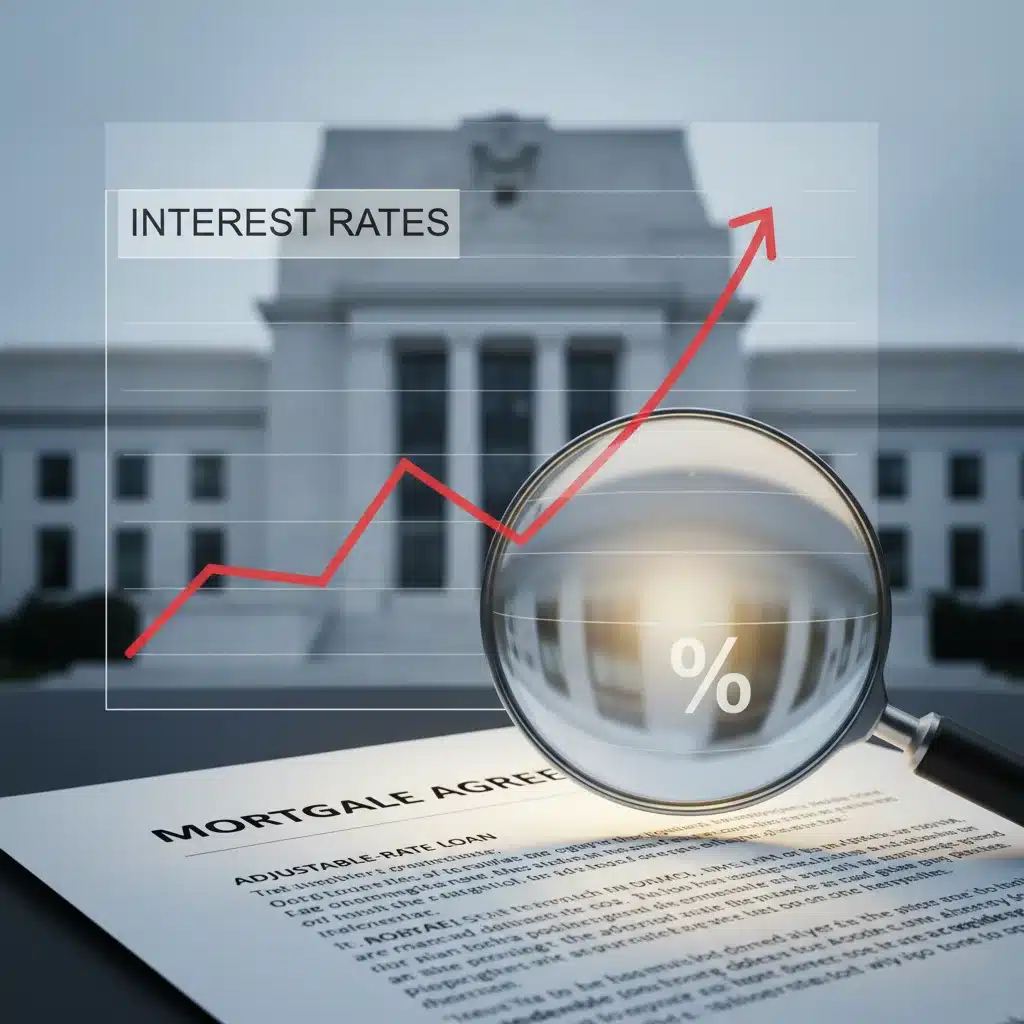
If you have an adjustable-rate mortgage (ARM), a 0.75% increase in the federal funds rate could directly translate to higher monthly payments once your initial fixed-rate period expires and your rate adjusts. ARMs are designed to fluctuate with market interest rates, typically tied to an index that is influenced by the federal funds rate. For instance, if your ARM is tied to the Secured Overnight Financing Rate (SOFR) or the Prime Rate, an increase in the Federal Reserve’s benchmark rate will likely lead to an increase in your ARM’s index, resulting in a higher interest rate on your loan and, consequently, a larger monthly payment. This is a critical consideration for those with ARMs, as the 2026 Federal Reserve Mortgage adjustment could significantly alter their budget.
Anúncios
Let’s consider an example: If you have an ARM with an outstanding balance of $300,000 and your rate adjusts by 0.75%, your monthly payment could increase by approximately $150 to $200, depending on the remaining term of your loan. While this might seem manageable for some, it can add up over time and strain household budgets, especially if combined with other rising costs.
Fixed-Rate Mortgages
For those with fixed-rate mortgages, a Federal Reserve interest rate hike generally has no direct impact on their existing monthly payments. The interest rate on a fixed-rate mortgage is locked in for the entire loan term, providing predictability and stability. This is one of the primary advantages of a fixed-rate mortgage during periods of rising interest rates. However, if you are planning to refinance your fixed-rate mortgage or purchase a new home with a fixed-rate loan after the hike, you would likely face higher interest rates than before the increase. The 2026 Federal Reserve Mortgage hike would make new fixed-rate loans more expensive.
Prospective Homebuyers
Prospective homebuyers will feel the brunt of a 0.75% Federal Reserve interest rate hike most acutely. Higher interest rates mean higher borrowing costs, which directly translates to reduced purchasing power and increased monthly mortgage payments for the same loan amount. For example, a 0.75% increase on a $400,000, 30-year fixed-rate mortgage could translate to an additional $170-$200 per month in interest payments. Over the life of the loan, this amounts to tens of thousands of dollars more paid in interest. This could push some potential buyers out of the market or force them to consider smaller, less expensive homes, especially in competitive markets where prices are already elevated. The affordability of housing will be a major concern following a 2026 Federal Reserve Mortgage adjustment.
Broader Economic and Housing Market Implications
Beyond individual mortgages, a Federal Reserve interest rate hike has a cascading effect on the broader economy and the housing market as a whole.
Cooling Housing Demand
Higher mortgage rates typically lead to a cooling of housing demand. As borrowing becomes more expensive, fewer people can afford to buy homes, and some may postpone their purchasing decisions. This reduction in demand can, in turn, slow down the rate of home price appreciation or even lead to price corrections in some areas. The fervent bidding wars and rapid price increases seen in recent years might subside, creating a more balanced market for buyers and sellers. This cooling effect is precisely what the Fed aims for when combating inflation, as housing costs are a significant component of the Consumer Price Index (CPI).
Impact on Home Equity and Refinancing
Existing homeowners might see a slowdown in the growth of their home equity if home prices stabilize or decline. While a 0.75% hike doesn’t automatically mean a crash, it can temper the rapid appreciation many have enjoyed. Furthermore, the prospect of refinancing an existing mortgage becomes less attractive when rates are higher. Homeowners who might have considered refinancing to lower their payments or tap into their home equity for other purposes may find that the new rates are not beneficial or even prohibitive. This can limit financial flexibility for some households. The 2026 Federal Reserve Mortgage rate change could significantly impact refinancing decisions.
Rental Market Dynamics
A less affordable homeownership market can also put upward pressure on the rental market. If fewer people can afford to buy, more individuals will remain in the rental pool, increasing demand for rental properties. This heightened demand, coupled with potentially higher operating costs for landlords (if they have variable-rate loans or need to finance property improvements at higher rates), could lead to increased rental prices. This creates a challenging environment for those unable to enter the homeownership market, further exacerbating housing affordability issues.

Strategies to Prepare for a 2026 Federal Reserve Mortgage Hike
Given the potential for a 0.75% Federal Reserve interest rate hike in 2026, proactive planning is essential. Here are several strategies to help you prepare:
For Current Homeowners with ARMs:
- Review Your Mortgage Terms: Understand when your ARM is scheduled to adjust, what index it’s tied to, and what caps are in place on interest rate increases. Knowing these details will help you anticipate potential payment changes.
- Consider Refinancing to a Fixed Rate: If you have an ARM and rates are still relatively low, now might be an opportune time to refinance into a fixed-rate mortgage. This would lock in your interest rate and protect you from future rate hikes, including the potential 2026 Federal Reserve Mortgage adjustment.
- Build an Emergency Fund: Having a robust emergency fund can provide a buffer against unexpected increases in your mortgage payments or other financial shocks. Aim for at least three to six months’ worth of essential living expenses.
- Prepay Your Principal: Even small additional payments towards your mortgage principal can reduce the overall loan amount, thereby mitigating the impact of any future interest rate increases on your total interest paid.
For Prospective Homebuyers:
- Get Pre-Approved: A pre-approval locks in an interest rate for a certain period (typically 30-90 days). If you’re serious about buying, getting pre-approved now could shield you from an immediate rate hike, at least for a short while.
- Save for a Larger Down Payment: A larger down payment reduces the amount you need to borrow, thereby lessening the impact of higher interest rates on your monthly payments. It also opens up more favorable loan terms.
- Improve Your Credit Score: A higher credit score can qualify you for the best available interest rates, even in a rising rate environment. Focus on paying bills on time, reducing debt, and monitoring your credit report for errors.
- Explore Different Loan Options: While fixed-rate mortgages are popular, understand all your options. FHA, VA, and USDA loans have specific benefits that might make them more attractive depending on your circumstances.
- Adjust Your Budget: Be realistic about what you can afford. If rates go up, your purchasing power will decrease. Adjust your home search criteria to align with a potentially higher interest rate environment.
For All Individuals:
- Monitor Economic News: Stay informed about Federal Reserve announcements, inflation data, and other economic indicators. This awareness will help you anticipate potential changes and make timely financial decisions.
- Consult a Financial Advisor: A financial professional can provide personalized advice based on your specific situation, helping you understand the implications of a 2026 Federal Reserve Mortgage hike and develop a tailored strategy.
- Reduce Other Debts: High-interest debts like credit card balances become even more burdensome in a rising rate environment. Prioritize paying down these debts to free up cash flow and improve your overall financial health.
Historical Context and Future Outlook
Understanding the Federal Reserve’s past actions can provide valuable context for future decisions. Historically, the Fed has raised rates during periods of economic expansion and inflationary pressure. For example, during the early 2000s and more recently in 2022-2023, the Fed embarked on hiking cycles to curb inflation. These cycles often have a noticeable, though sometimes delayed, impact on the housing market.
Looking specifically at 2026, the projection of a 0.75% Federal Reserve Mortgage hike suggests that policymakers anticipate continued economic growth and potential inflationary risks. However, economic forecasts are subject to change, and various factors—such as geopolitical events, global economic slowdowns, or unexpected domestic economic shifts—could alter the Fed’s trajectory. It’s important to remember that the Fed’s decisions are data-dependent, meaning they will react to the prevailing economic conditions at the time. Therefore, while a 0.75% hike is a possibility, it is not a certainty, and continuous monitoring of economic indicators will be key.

The Psychology of Rate Hikes: Don’t Panic, Plan
The mere mention of interest rate hikes can sometimes induce panic among consumers. However, it’s crucial to approach these prospects with a calm and strategic mindset. A 0.75% increase, while significant, is a manageable adjustment for many when properly anticipated and planned for. The key is to avoid reactive decisions and instead focus on proactive measures that strengthen your financial position.
For instance, if you’re a homeowner with a fixed-rate mortgage, the primary impact will be on the broader economy and potentially your home’s equity growth, not your monthly payment. For those with ARMs or prospective buyers, the impact is more direct, but ample time often exists to adjust strategies. The market tends to price in anticipated changes, meaning lenders and borrowers often begin to factor in potential hikes before they are officially announced. This provides a window of opportunity for informed action.
Long-Term Financial Health
Ultimately, navigating a 2026 Federal Reserve Mortgage hike, or any significant economic shift, boils down to maintaining sound long-term financial habits. This includes consistently saving, managing debt responsibly, and regularly reviewing your financial plan. Diversifying investments beyond real estate, if applicable, and ensuring a balanced portfolio can also provide resilience against market fluctuations.
Consider the broader economic picture. While higher interest rates can make borrowing more expensive, they are often a sign of a strong, growing economy that the Fed is attempting to stabilize. A healthy economy can lead to job growth, higher wages, and overall prosperity, which can indirectly offset some of the challenges posed by higher borrowing costs. Therefore, viewing a rate hike as part of a larger economic cycle, rather than an isolated negative event, can help maintain perspective.
Conclusion
The potential for a 0.75% Federal Reserve interest rate hike in 2026 is a significant economic event that warrants careful consideration, particularly for anyone with a mortgage or plans to enter the housing market. While fixed-rate mortgage holders will largely be shielded from direct payment increases, adjustable-rate mortgage holders and prospective buyers will face higher borrowing costs. The broader housing market could see a cooling of demand and a moderation in price appreciation. However, with proactive planning, informed decision-making, and a solid understanding of the Federal Reserve’s role, individuals can effectively navigate these changes. Stay informed, review your financial situation, and consult with financial experts to ensure you are well-prepared for any adjustments the 2026 Federal Reserve Mortgage landscape may bring.