Early Childhood Development: Key Milestones 0-5 Years
Anúncios
Early Childhood Development: Key Milestones 0-5 Years to Support
The journey of early childhood is a period of extraordinary growth and transformation. From the moment of birth until they reach school age, children are rapidly developing a vast array of skills and abilities that form the foundation for their future learning, well-being, and success. Understanding and supporting these critical early childhood milestones is not just beneficial; it’s essential for parents, caregivers, and educators alike. This comprehensive guide delves into the six key developmental areas, outlining what to expect and, more importantly, how to actively foster healthy growth in children aged 0-5 years.
Every child is unique, and their developmental path will unfold at its own pace. While there are general timelines for when certain milestones typically emerge, it’s important to remember that these are guidelines, not strict deadlines. Some children may reach certain milestones earlier, while others may take a little longer. The key is to observe, engage, and provide a nurturing environment that encourages exploration and learning. This article will provide you with a detailed roadmap, covering cognitive, social-emotional, language and communication, gross motor, fine motor, and adaptive skills development, empowering you to effectively support the incredible journey of your little one.
The Importance of Recognizing Early Childhood Milestones
Recognizing early childhood milestones is more than just tracking a child’s progress; it’s about understanding their developmental journey and identifying areas where they might need additional support or enrichment. These milestones act as markers, indicating that a child is developing within a typical range. When a child consistently misses several milestones in a particular area, it can signal a potential developmental delay, prompting early intervention which can be crucial for positive long-term outcomes.
Anúncios
Early intervention refers to services and support that help babies and young children with developmental delays or disabilities. The earlier these interventions begin, the more effective they tend to be. For instance, if a child is having difficulty with speech and language development, early speech therapy can make a significant difference in their ability to communicate effectively. Similarly, early identification of motor skill challenges can lead to physical or occupational therapy that helps a child build strength and coordination, enabling them to participate more fully in daily activities and play.
Beyond identifying potential delays, understanding early childhood milestones also empowers parents and educators to tailor their interactions and activities to a child’s current developmental stage. This means providing age-appropriate toys, games, and learning experiences that challenge and stimulate without causing frustration. For example, a 6-month-old benefits from tummy time and reaching for toys, while a 3-year-old thrives on imaginative play and simple puzzles. By aligning activities with a child’s developmental level, we foster a love for learning, build confidence, and encourage a sense of accomplishment.
Anúncios
Furthermore, observing these milestones helps create a deeper connection between children and their caregivers. When you understand what your child is capable of and what they are working towards, you can celebrate their achievements, big and small, and offer targeted encouragement. This active participation in their development strengthens bonds and creates a supportive environment where children feel secure enough to explore and grow. It’s about being present, observant, and responsive to their evolving needs, which is a cornerstone of positive early childhood experiences.
1. Cognitive Development: Building Blocks of the Mind (0-5 Years)
Cognitive development refers to the growth of a child’s ability to think, reason, solve problems, and understand the world around them. It’s the foundation for all future learning and involves processes like memory, attention, perception, and language. Supporting cognitive early childhood milestones is paramount.
Milestones to Look For:
- 0-12 Months:
- Object Permanence: Understanding that objects still exist even when they can’t be seen (e.g., finding a hidden toy).
- Cause and Effect: Learning that actions have consequences (e.g., shaking a rattle makes noise).
- Problem Solving: Reaching for desired objects, pulling a string to get a toy.
- Imitation: Copying simple actions or facial expressions.
- 1-3 Years:
- Symbolic Play: Using objects to represent others (e.g., a block as a phone).
- Categorization: Sorting objects by color, shape, or size.
- Simple Puzzles: Completing 2-4 piece puzzles.
- Following Instructions: Understanding and following two-step commands.
- 3-5 Years:
- Early Math Concepts: Counting to 10, recognizing numbers, understanding ‘more’ or ‘less’.
- Pre-reading Skills: Recognizing letters, understanding that print carries meaning.
- Memory: Recalling parts of stories, remembering familiar routines.
- Reasoning: Asking ‘why’ questions, understanding simple sequences.
How to Support Cognitive Development:
- Read Aloud Daily: Exposes children to new vocabulary, concepts, and storytelling. Ask questions about the story.
- Engage in Play: Provide opportunities for open-ended play with blocks, puzzles, and art supplies.
- Ask Open-Ended Questions: Encourage critical thinking by asking ‘What do you think will happen next?’ or ‘Why did that happen?’
- Explore the Environment: Take walks, visit museums or parks, and discuss what you see and hear.
- Introduce Sorting and Matching Games: Helps with categorization and pattern recognition.
- Sing Songs and Rhymes: Enhances memory and language skills.
2. Social-Emotional Development: Learning to Connect (0-5 Years)
Social-emotional development refers to a child’s ability to understand and manage their emotions, form positive relationships, and navigate social situations. These early childhood milestones are crucial for mental health and future social success.
Milestones to Look For:
- 0-12 Months:
- Smiling Responsively: Responding to smiles from others.
- Showing Affection: Cuddling, reaching for caregivers.
- Stranger Anxiety: Showing discomfort around unfamiliar people (typical around 6-9 months).
- Enjoying Social Games: Playing peek-a-boo.
- 1-3 Years:
- Parallel Play: Playing alongside other children without much interaction.
- Expressing Emotions: Using words or actions to show happiness, sadness, anger.
- Imitating Adults: Copying household chores or specific behaviors.
- Developing Independence: Wanting to do things themselves.
- 3-5 Years:
- Cooperative Play: Playing together, sharing, taking turns.
- Empathy: Showing concern for others’ feelings.
- Self-Regulation: Managing impulses, waiting their turn.
- Forming Friendships: Having preferred playmates.
How to Support Social-Emotional Development:
- Be a Responsive Caregiver: Respond to your child’s cues, comfort them when distressed.
- Model Positive Behavior: Show kindness, empathy, and respectful communication.
- Encourage Sharing and Turn-Taking: Facilitate these skills during playtime.
- Talk About Emotions: Help children identify and label their feelings. ‘I see you’re feeling frustrated.’
- Provide Opportunities for Social Interaction: Arrange playdates, enroll in group activities.
- Teach Problem-Solving Skills: Guide them through conflicts with peers or siblings.
3. Language and Communication Development: Finding Their Voice (0-5 Years)
Language and communication development involves a child’s ability to understand and use spoken language, as well as non-verbal cues. These early childhood milestones are critical for expressing needs, thoughts, and interacting with the world.
Milestones to Look For:
- 0-12 Months:
- Cooing and Babbling: Making vowel and consonant sounds.
- Responding to Name: Turning their head when called.
- Understanding Simple Words: ‘No,’ ‘bye-bye.’
- First Words: Typically around 9-15 months.
- 1-3 Years:
- Vocabulary Explosion: Rapid increase in the number of words they know.
- Two-Word Sentences: ‘More juice,’ ‘mommy up.’
- Following Simple Directions: ‘Put the ball in the box.’
- Asking Simple Questions: ‘What’s that?’ ‘Where go?’
- 3-5 Years:
- Speaking in Full Sentences: Using 4-5 words or more.
- Telling Simple Stories: Recalling events in sequence.
- Understanding Complex Directions: Following three-step commands.
- Asking and Answering ‘Wh’ Questions: Who, what, where, when, why.
How to Support Language and Communication Development:
- Talk, Talk, Talk: Narrate your day, describe objects, and explain actions.
- Read and Sing: Expose children to a rich variety of words and sounds.
- Listen Actively: Give them your full attention when they speak, even if it’s babble.
- Expand on Their Words: If they say ‘car,’ you can say ‘Yes, that’s a big red car!’
- Ask Open-Ended Questions: Encourage them to elaborate beyond ‘yes’ or ‘no’ answers.
- Avoid ‘Baby Talk’: Speak clearly and use proper grammar.
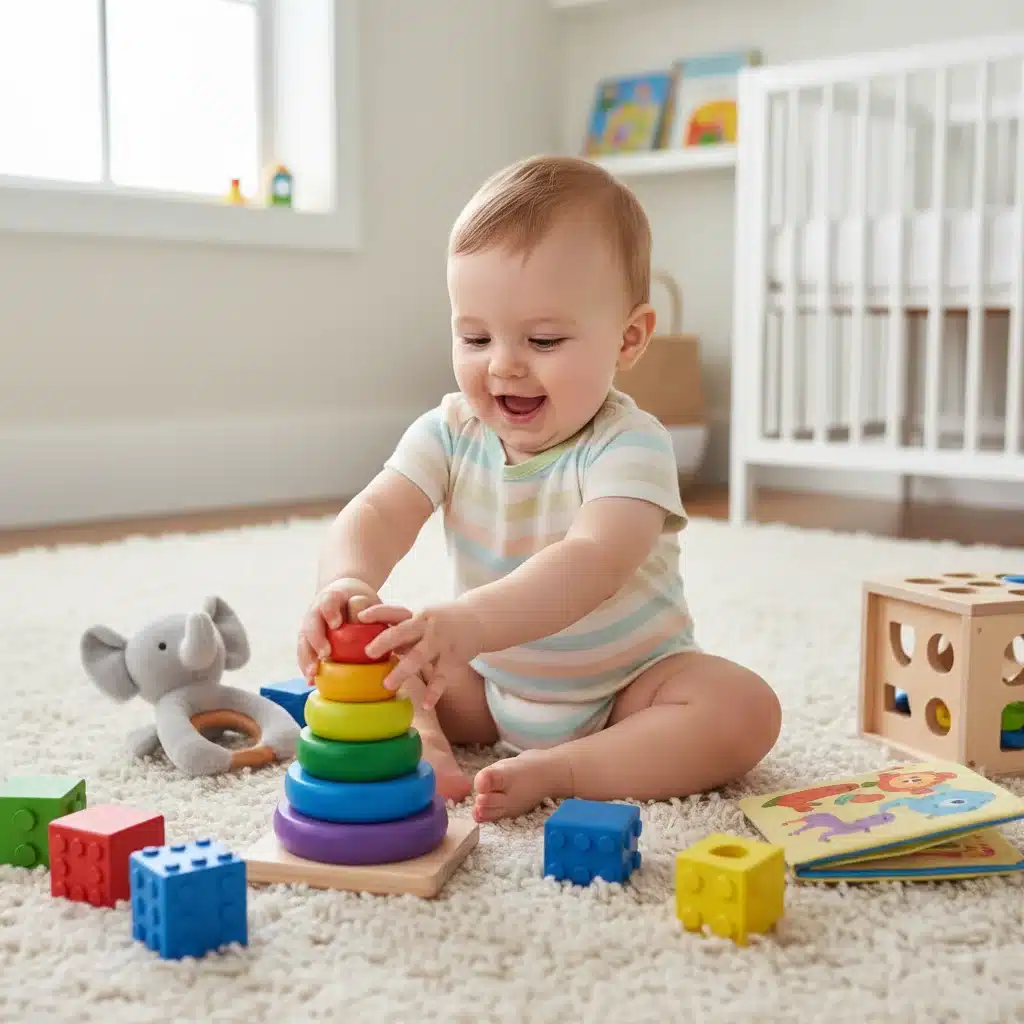
4. Gross Motor Development: Moving and Exploring (0-5 Years)
Gross motor development involves the use of large muscles for movement and coordination. These early childhood milestones are fundamental for physical independence and exploration.
Milestones to Look For:
- 0-12 Months:
- Head Control: Holding head steady.
- Rolling Over: Front to back, back to front.
- Sitting Independently: Without support.
- Crawling/Creeping: Moving around on hands and knees or belly.
- Pulling to Stand:: Using furniture for support.
- Cruising: Walking while holding onto furniture.
- First Steps: Often occurs around 12 months, but can vary.
- 1-3 Years:
- Walking Independently: Steady gait.
- Running: With increasing coordination.
- Climbing: Stairs, playground equipment.
- Kicking a Ball: With some accuracy.
- Jumping: With both feet off the ground.
- 3-5 Years:
- Hopping on One Foot: For several seconds.
- Riding a Tricycle: Pedaling with ease.
- Throwing and Catching a Ball: With improved aim.
- Balancing: Standing on one foot, walking on a line.
- Skipping: With alternating feet.
How to Support Gross Motor Development:
- Provide Tummy Time: Essential for building neck and core strength in infants.
- Create a Safe Space: Allow infants and toddlers to explore freely on the floor.
- Encourage Outdoor Play: Running, jumping, climbing, and exploring nature.
- Play Active Games: Tag, hide-and-seek, dancing.
- Offer Age-Appropriate Equipment: Balls, tricycles, push toys.
- Limit Screen Time: Encourage active movement over sedentary activities.
5. Fine Motor Development: Precision and Dexterity (0-5 Years)
Fine motor development involves the coordination of small muscles, especially in the hands and fingers, in conjunction with the eyes. These early childhood milestones are crucial for tasks like writing, drawing, and self-care.
Milestones to Look For:
- 0-12 Months:
- Grasping Reflex: Holding onto objects placed in their hand.
- Reaching for Objects: With increasing accuracy.
- Transferring Objects: From one hand to the other.
- Pincer Grasp: Picking up small objects with thumb and forefinger (around 9-12 months).
- Banging Objects Together: Exploring sounds and coordination.
- 1-3 Years:
- Stacking Blocks: Building towers of 2-4 blocks.
- Turning Pages of a Book: One at a time.
- Scribbling: Making random marks with crayons.
- Using a Spoon: Feeding themselves with some spills.
- Stringing Large Beads: Developing hand-eye coordination.
- 3-5 Years:
- Drawing Shapes: Circles, squares, triangles.
- Cutting with Scissors: Following a line.
- Dressing Themselves: Zipping, buttoning, snapping.
- Holding a Crayon/Pencil: With a more mature grasp.
- Building Complex Structures: With LEGOs or other construction toys.
How to Support Fine Motor Development:
- Offer Manipulative Toys: Blocks, puzzles, shape sorters, playdough.
- Encourage Drawing and Painting: Provide various art supplies.
- Practice Self-Care Skills: Encourage independent dressing, feeding, and brushing teeth.
- Engage in Sensory Play: Sand, water, or rice bins for scooping and pouring.
- Introduce Cutting Activities: With child-safe scissors and paper.
- Small Object Play: Supervised play with beads, small blocks (ensure safety for choking hazards).
6. Adaptive Skills Development: Everyday Independence (0-5 Years)
Adaptive skills, also known as self-help skills, refer to a child’s ability to care for themselves and function independently in daily life. These early childhood milestones are essential for self-sufficiency.
Milestones to Look For:
- 0-12 Months:
- Feeding: Sucking, swallowing, beginning to eat pureed foods.
- Sleeping: Developing sleep routines.
- Comforting Self: Sucking thumb or pacifier.
- Cooperating with Dressing: Lifting arms or legs.
- 1-3 Years:
- Drinking from a Cup: With minimal spills.
- Using a Spoon and Fork: Feeding themselves.
- Helping with Dressing: Pulling off socks, pushing arms through sleeves.
- Toilet Training Readiness: Showing interest, staying dry for longer periods.
- Washing and Drying Hands: With assistance.
- 3-5 Years:
- Independent Dressing: Zipping, buttoning, tying simple knots (later).
- Full Toilet Independence: Including flushing and handwashing.
- Brushing Teeth: With supervision.
- Helping with Chores: Putting away toys, setting the table.
- Following Routine: Understanding and participating in daily schedules.
How to Support Adaptive Skills Development:
- Establish Routines: Predictable schedules for meals, sleep, and play.
- Encourage Self-Feeding: Offer finger foods, child-sized utensils.
- Involve Them in Chores: Give age-appropriate tasks like putting toys away.
- Practice Dressing Skills: Allow time and provide gentle guidance.
- Support Toilet Training: Follow their cues and be patient.
- Teach Hygiene Habits: Handwashing, teeth brushing.

When to Seek Professional Guidance for Early Childhood Milestones
While every child develops at their own pace, it’s important for parents and caregivers to be aware of potential signs that might warrant professional evaluation. Trust your instincts. If you have persistent concerns about your child’s development, it’s always best to consult with a pediatrician or other developmental specialist. Early identification of developmental delays can lead to timely interventions that significantly improve a child’s outcomes.
Here are some general indicators that might suggest a need for further assessment:
- Missing several milestones in one developmental area: For example, if a 15-month-old isn’t babbling, isn’t responding to their name, and doesn’t make eye contact, these could be red flags for communication and social-emotional development.
- Loss of previously acquired skills: If a child was speaking words and then stops, or was walking and then loses the ability, this is a significant concern and requires immediate attention.
- Lack of responsiveness: Not responding to sounds, name, or showing interest in interacting with caregivers.
- Persistent difficulties in social interaction: Avoiding eye contact, not smiling or laughing, or showing little interest in other children by preschool age.
- Significant delays in motor skills: For instance, not sitting by 9 months, not walking by 18 months, or having very stiff or floppy limbs.
- Unusual or repetitive behaviors: Repetitive hand flapping, body rocking, or an unusual preoccupation with specific objects.
Your pediatrician is your primary resource for developmental screening and guidance. They can assess your child’s progress, address your concerns, and, if necessary, refer you to specialists such as developmental pediatricians, speech therapists, occupational therapists, physical therapists, or early intervention programs. Remember, seeking help early is a sign of proactive parenting and provides your child with the best possible start.
Creating a Nurturing Environment for Optimal Development
Beyond understanding the specific early childhood milestones, creating a rich, supportive, and stimulating environment is the most powerful tool you have to foster your child’s overall development. This involves a combination of love, interaction, safety, and opportunity.
- Prioritize Responsive Relationships: Children thrive on secure attachments. Respond to their needs, offer comfort, and engage in warm, reciprocal interactions. This builds trust and security, which are essential for all areas of development.
- Provide a Safe and Stimulating Environment: Child-proof your home to allow for safe exploration. Offer a variety of age-appropriate toys and materials that encourage different types of play – sensory, constructive, imaginative. Rotate toys to keep things fresh and interesting.
- Limit Screen Time: Excessive screen time can displace opportunities for active play, social interaction, and language development. The American Academy of Pediatrics recommends no screen time for children under 18-24 months (except video-chatting with family) and very limited, high-quality screen time for 2-5 year olds.
- Encourage Outdoor Play: Nature provides an unparalleled environment for gross motor development, sensory exploration, and imaginative play. Let children run, climb, dig, and discover.
- Promote Healthy Habits: Ensure adequate sleep, a balanced diet, and regular physical activity. These are foundational for both physical and cognitive health.
- Engage in Daily Routines: Predictable schedules provide a sense of security and help children learn about sequences and expectations. Involve them in age-appropriate ways (e.g., helping set the table).
- Celebrate Small Victories: Acknowledge and praise your child’s efforts and achievements, no matter how small. This builds self-esteem and encourages them to keep trying new things.
- Be Patient and Flexible: Development is not linear. There will be periods of rapid growth and times when progress seems slower. Be patient, adjust your expectations, and remember that every child’s journey is unique.
By consciously integrating these practices into daily life, you create a powerful ecosystem that nurtures every aspect of your child’s development, helping them reach their full potential and navigate the world with confidence and curiosity.
Conclusion: Nurturing Growth Through Understanding Early Childhood Milestones
Understanding and supporting early childhood milestones is one of the most profound and rewarding aspects of parenting and early education. The period from birth to age five is a time of incredible plasticity, where the brain develops at an astonishing rate, laying down the neural pathways that will serve a child for a lifetime. By being informed about what to expect in cognitive, social-emotional, language, gross motor, fine motor, and adaptive development, we are better equipped to provide the precise support and stimulation our children need.
Remember that these milestones are guides, not rigid rules. Each child is an individual, blossoming at their own pace. The goal is not to rush development but to provide a rich, responsive, and loving environment that encourages exploration, learning, and connection. Engage in play, read together, talk often, and celebrate every small step forward. Your active participation in their early years has an immeasurable impact on their future well-being and success.
Should concerns arise about your child’s developmental progress, do not hesitate to consult with your pediatrician. Early intervention can make a world of difference. By embracing the wonder of early childhood and committing to nurturing these foundational skills, we empower the next generation to grow into confident, capable, and thriving individuals. The investment you make in supporting these early childhood milestones today will yield dividends for years to come, shaping not just a child’s life, but the fabric of our future society.