AI’s Impact on K-12 Curriculum in 2025: Key Skills for Students
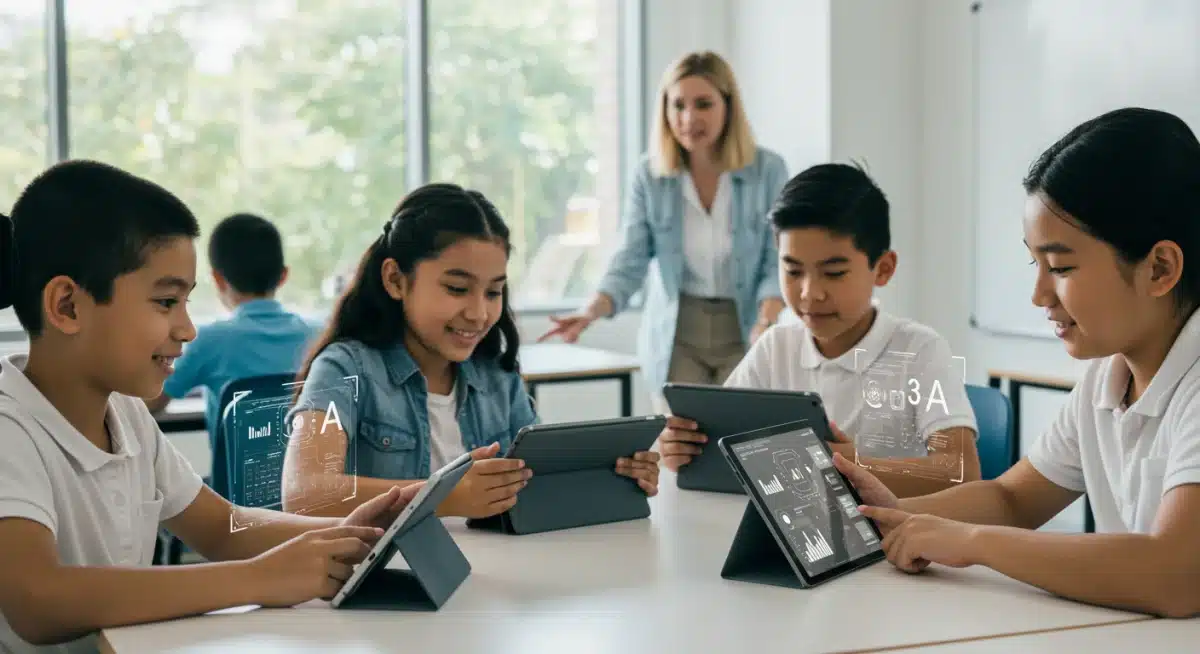
By 2025, artificial intelligence will profoundly reshape K-12 education, necessitating a curriculum shift to cultivate five essential skills for students to navigate and innovate within an an AI-driven landscape.
The rapid advancement of artificial intelligence (AI) is not just a technological trend; it’s a fundamental shift poised to redefine industries, economies, and indeed, education. By 2025, the impact of AI on K-12 curriculum will be undeniable, requiring a proactive evolution in how we prepare students for a future where AI is deeply integrated into daily life and work. This transformation calls for a focus on specific skills that will empower the next generation.
Understanding the AI Revolution in Education
The integration of AI into K-12 education isn’t merely about introducing new tools; it’s about fundamentally rethinking pedagogical approaches and learning outcomes. AI offers personalized learning experiences, automates administrative tasks, and provides data-driven insights that can tailor instruction to individual student needs. This revolution demands that educators and policymakers understand AI’s capabilities and implications to effectively shape future curricula.
As AI becomes more sophisticated, its role shifts from a supplementary resource to a core component of the learning ecosystem. This means moving beyond basic computer literacy to fostering a deeper understanding of how AI works, its ethical considerations, and its potential to solve complex problems. The goal is to create not just users of AI, but thoughtful creators and critical evaluators of AI systems.
Personalized Learning Pathways
One of the most significant promises of AI in education is its ability to personalize the learning journey for every student. AI-powered platforms can adapt content, pace, and teaching methods based on a student’s progress, strengths, and weaknesses.
- Adaptive assessments identify knowledge gaps in real-time.
- Tailored content delivery ensures engagement and relevance.
- Individualized feedback promotes self-correction and mastery.
- AI tutors offer support outside of traditional classroom hours.
This personalization allows for a more equitable and effective learning environment, ensuring that students receive the specific support they need to succeed academically. It also frees up teachers to focus on higher-order tasks like mentoring and facilitating complex projects.
The shift towards AI-enhanced learning necessitates a curriculum that is flexible and responsive. It moves away from a one-size-fits-all model to one that celebrates individual learning styles and paces. Ultimately, understanding the AI revolution means embracing a future where education is more dynamic, inclusive, and effective for all.
Essential Skill 1: Algorithmic Literacy and Data Fluency
In an AI-driven world, understanding the basic principles behind AI and how data is processed becomes paramount. Algorithmic literacy isn’t about coding every student into a developer, but rather equipping them with the conceptual understanding to interact intelligently with AI systems. Data fluency, on the other hand, involves the ability to interpret, analyze, and ethically use data, which is the fuel for all AI applications.
By 2025, students will encounter AI in almost every aspect of their lives, from personalized recommendations to automated decision-making processes. Without a foundational understanding of these underlying mechanisms, they risk being passive consumers rather than active participants and informed citizens. This skill empowers them to question, critique, and contribute to the development of AI.
Understanding AI Fundamentals
Teaching algorithmic literacy involves demystifying AI concepts, making them accessible to K-12 students. This can include exploring how algorithms make decisions, understanding biases in data, and recognizing the limitations of current AI technologies.
- Introduction to basic machine learning concepts.
- Exploring how AI learns from data patterns.
- Discussing the ethical implications of AI decisions.
- Understanding the difference between human and AI intelligence.
These foundational understandings are crucial for students to become informed citizens who can engage critically with AI news and developments, making them less susceptible to misinformation and more capable of contributing to societal conversations about AI’s role.
Data fluency goes hand-in-hand with algorithmic literacy. Students need to be able to understand what data is collected, how it’s used, and the privacy implications. This involves developing skills in data interpretation, visualization, and basic statistical reasoning, allowing them to make sense of the vast amounts of information generated by AI systems. The ability to discern credible data from misleading statistics will be a cornerstone of future literacy.
Essential Skill 2: Critical Thinking and Ethical AI Use
As AI becomes more prevalent, the ability to think critically about its applications and ethical implications will be indispensable. This skill moves beyond merely understanding how AI works to evaluating its societal impact, identifying potential biases, and advocating for responsible AI development and deployment. Students must learn to question the outputs of AI, rather than accepting them uncritically, fostering a mindset of informed skepticism.
The rapid evolution of AI brings with it complex ethical dilemmas, from data privacy and algorithmic bias to job displacement and autonomous decision-making. K-12 students in 2025 will need to be equipped to navigate these challenges, developing a strong moral compass and the analytical tools to engage in thoughtful ethical reasoning. This involves moving beyond rote memorization to complex problem-solving and moral deliberation.
Navigating Bias and Fairness in AI
A significant aspect of ethical AI use is recognizing and addressing bias in algorithmic systems. AI models are trained on data, and if that data reflects existing societal biases, the AI will perpetuate and even amplify them. Students need to understand how these biases arise and how they can be mitigated.
- Analyzing real-world examples of AI bias.
- Discussing the societal consequences of biased AI.
- Exploring methods for promoting fairness in AI development.
- Debating the role of human oversight in AI systems.
These discussions should encourage students to develop a nuanced understanding of AI’s limitations and the importance of human values in its design and application. It’s about fostering a sense of responsibility towards technology.
Critical thinking extends to evaluating the reliability and validity of AI-generated content. With the rise of deepfakes and sophisticated AI content creation, students must develop advanced media literacy skills to distinguish authentic information from AI-fabricated realities. This includes cross-referencing sources, identifying logical fallacies, and understanding the motivations behind digital content. Cultivating this discerning mindset is vital for maintaining an informed citizenry.
Essential Skill 3: Creativity and Innovation with AI
Far from stifling creativity, AI can be a powerful tool for enhancing and amplifying human innovation. Students in 2025 will need to learn how to leverage AI to generate new ideas, solve problems in novel ways, and create original works across various domains. This involves viewing AI not as a replacement for human creativity, but as a collaborative partner that can expand the boundaries of what’s possible.
The future workforce will increasingly demand individuals who can think outside the box and apply AI to foster breakthroughs. K-12 curricula must encourage experimentation, design thinking, and a willingness to iterate and fail. By integrating AI into creative projects, students can develop skills in prompt engineering, data-driven design, and algorithmic art, pushing the boundaries of traditional creative fields.
AI as a Creative Partner
Teaching students to use AI as a creative partner involves hands-on projects where AI tools are integrated into the creative process. This could range from using AI for music composition or visual art generation to employing AI in scientific discovery and engineering design.
- Utilizing AI art generators for visual projects.
- Experimenting with AI music composition tools.
- Employing AI for brainstorming and idea generation.
- Designing AI-powered solutions to real-world problems.
These activities allow students to explore their creative potential in new dimensions, understanding how AI can augment human ingenuity rather than diminish it. It fosters a playful and experimental approach to technology, which is crucial for innovation.
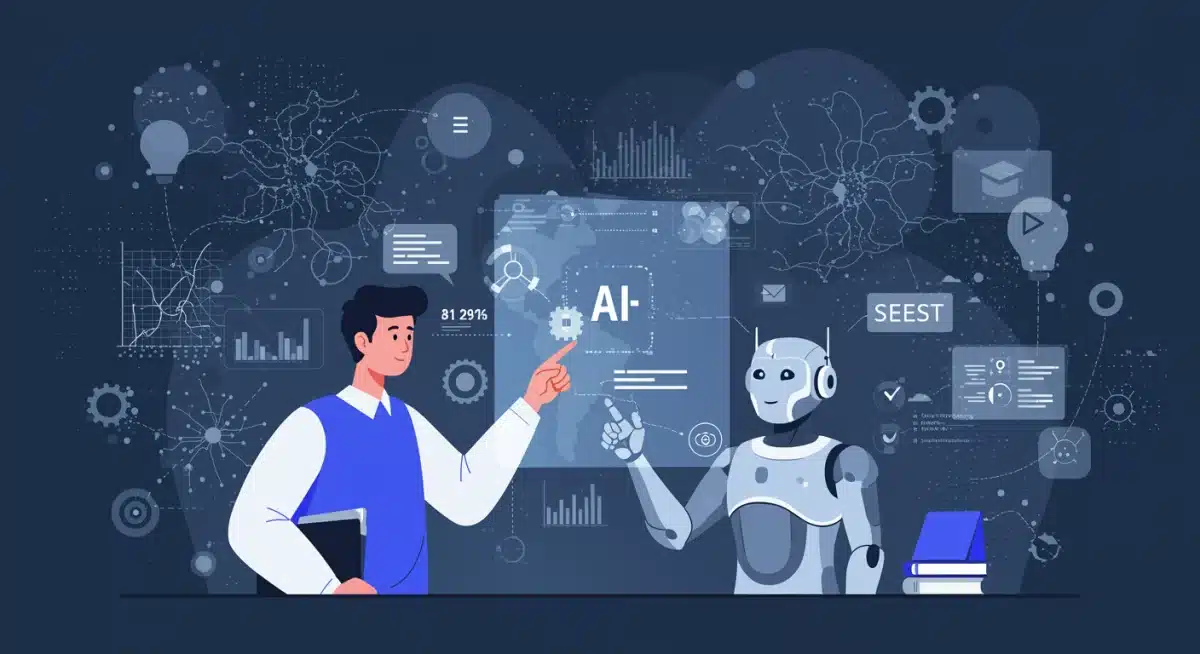
Innovation with AI also requires a strong foundation in problem-solving. Students must be able to identify challenges, break them down into manageable parts, and then strategically apply AI tools to find solutions. This iterative process of problem definition, AI application, evaluation, and refinement is central to leveraging AI for genuine innovation. Encouraging this entrepreneurial mindset from a young age will be key to developing future innovators.
Essential Skill 4: Collaboration and Communication in AI Environments
The complexity of AI systems often necessitates collaborative efforts, involving individuals with diverse skill sets. Students in 2025 will need to effectively collaborate with peers, educators, and even AI itself, to develop and deploy AI solutions. Furthermore, the ability to clearly communicate complex AI concepts to both technical and non-technical audiences will be vital for success in an AI-driven world.
Teamwork in an AI context means understanding how to integrate different perspectives and specialized knowledge to achieve a common goal. This can involve working with data scientists, ethicists, designers, and domain experts. K-12 curricula should emphasize project-based learning that mimics these real-world collaborative scenarios, fostering interdisciplinary skills and mutual understanding.
Effective AI Teamwork
Developing collaboration skills in AI environments involves group projects where students tackle AI-related challenges together. This fosters a sense of shared responsibility and the need for clear communication.
- Working in teams to design simple AI models.
- Collaborating on ethical AI case studies.
- Peer-reviewing AI-generated content for accuracy.
- Presenting AI project outcomes to a diverse audience.
Such experiences teach students the value of diverse perspectives and the importance of active listening and constructive feedback in complex technical endeavors. They learn to leverage collective intelligence to overcome challenges.
Effective communication goes beyond simply presenting information; it involves translating technical AI jargon into understandable language for various stakeholders. This includes writing clear documentation, creating compelling presentations, and engaging in constructive dialogue about AI’s societal implications. Students should practice explaining AI concepts, limitations, and benefits in a way that resonates with different audiences, preparing them for roles where bridging technical and non-technical divides is essential.
Essential Skill 5: Adaptability and Lifelong Learning
The field of AI is characterized by rapid and continuous change. What is cutting-edge today may be obsolete tomorrow. Therefore, one of the most crucial skills for K-12 students in 2025 will be adaptability and a commitment to lifelong learning. This involves fostering a growth mindset, curiosity, and the ability to quickly acquire new knowledge and skills as AI technologies evolve.
Traditional education often focuses on acquiring a fixed body of knowledge. However, the AI era demands a departure from this model towards one that emphasizes continuous learning and reskilling. Students must be prepared to navigate uncertainty, embrace new tools, and constantly update their understanding of AI’s capabilities and ethical frameworks. This foundational flexibility will be their greatest asset.
Cultivating a Growth Mindset
Encouraging a growth mindset means teaching students that their abilities can be developed through dedication and hard work, especially in a rapidly changing field like AI. It’s about fostering resilience in the face of challenges and viewing mistakes as learning opportunities.
- Engaging with emerging AI technologies and trends.
- Participating in hackathons or AI challenges.
- Seeking out online resources for continuous AI learning.
- Reflecting on personal learning journeys and skill development.
These experiences help students understand that learning is an ongoing process, not a destination. It instills in them the self-efficacy needed to tackle new technological frontiers with confidence and enthusiasm.
Lifelong learning in the context of AI also means developing strong self-directed learning skills. Students need to be able to identify their own learning needs, locate relevant resources, and independently master new concepts. This autonomy is essential for staying current in a field where formal training may not always keep pace with innovation. The K-12 curriculum must lay the groundwork for this independent pursuit of knowledge, empowering students to be perpetual learners in an AI-powered world.
| Key Skill | Brief Description |
|---|---|
| Algorithmic Literacy | Understanding how AI works, its data, and ethical implications. |
| Critical Thinking & Ethical AI Use | Evaluating AI’s impact, identifying biases, and promoting responsible use. |
| Creativity & Innovation with AI | Leveraging AI tools to generate new ideas, solve problems, and create. |
| Adaptability & Lifelong Learning | Fostering a growth mindset and continuous learning in a rapidly changing AI landscape. |
Frequently Asked Questions About AI in K-12 Education
AI will revolutionize K-12 teaching by enabling highly personalized learning paths, automating administrative tasks, and providing data-driven insights for educators. This shift allows teachers to focus more on mentorship, critical thinking development, and addressing individual student needs, moving away from a one-size-fits-all approach to instruction.
Major challenges include ensuring equitable access to technology, providing adequate teacher training, developing ethical guidelines for AI use, and updating curricula to keep pace with rapid technological advancements. Overcoming these hurdles requires significant investment, collaboration, and ongoing policy development to ensure successful and responsible integration.
Schools can prepare teachers through comprehensive professional development programs focused on AI literacy, ethical considerations, and practical applications of AI tools in the classroom. Training should emphasize how AI can augment teaching, not replace it, and equip educators with the skills to guide students in responsible and effective AI usage.
No, AI is highly unlikely to replace human teachers. Instead, AI will serve as a powerful assistant, augmenting teachers’ capabilities by handling routine tasks and providing personalized support. Human educators remain crucial for fostering socio-emotional development, critical thinking, creativity, and ethical reasoning—areas where AI cannot replicate human interaction and judgment.
Parents play a vital role by fostering curiosity about technology, encouraging critical thinking about digital content, and promoting ethical discussions around AI at home. They can also support schools in their AI integration efforts and advocate for curricula that prioritize future-ready skills, ensuring their children are well-prepared for an AI-driven society.
Conclusion
The advent of AI presents both profound challenges and unparalleled opportunities for K-12 education. By 2025, the curriculum must evolve to cultivate skills beyond traditional academics, focusing on algorithmic literacy, critical thinking, creative innovation, collaborative communication, and unwavering adaptability. These five essential skills are not merely additions to an already packed curriculum; they are foundational literacies for the 21st century, crucial for empowering students to thrive in a world increasingly shaped by artificial intelligence. Investing in these areas now will ensure that the next generation is not just prepared for the future, but actively capable of shaping it responsibly and innovatively.