Navigating New US Data Privacy Laws: Essential Compliance Steps for Businesses
Anúncios
Navigating New US Data Privacy Laws: Essential Compliance Steps for Businesses
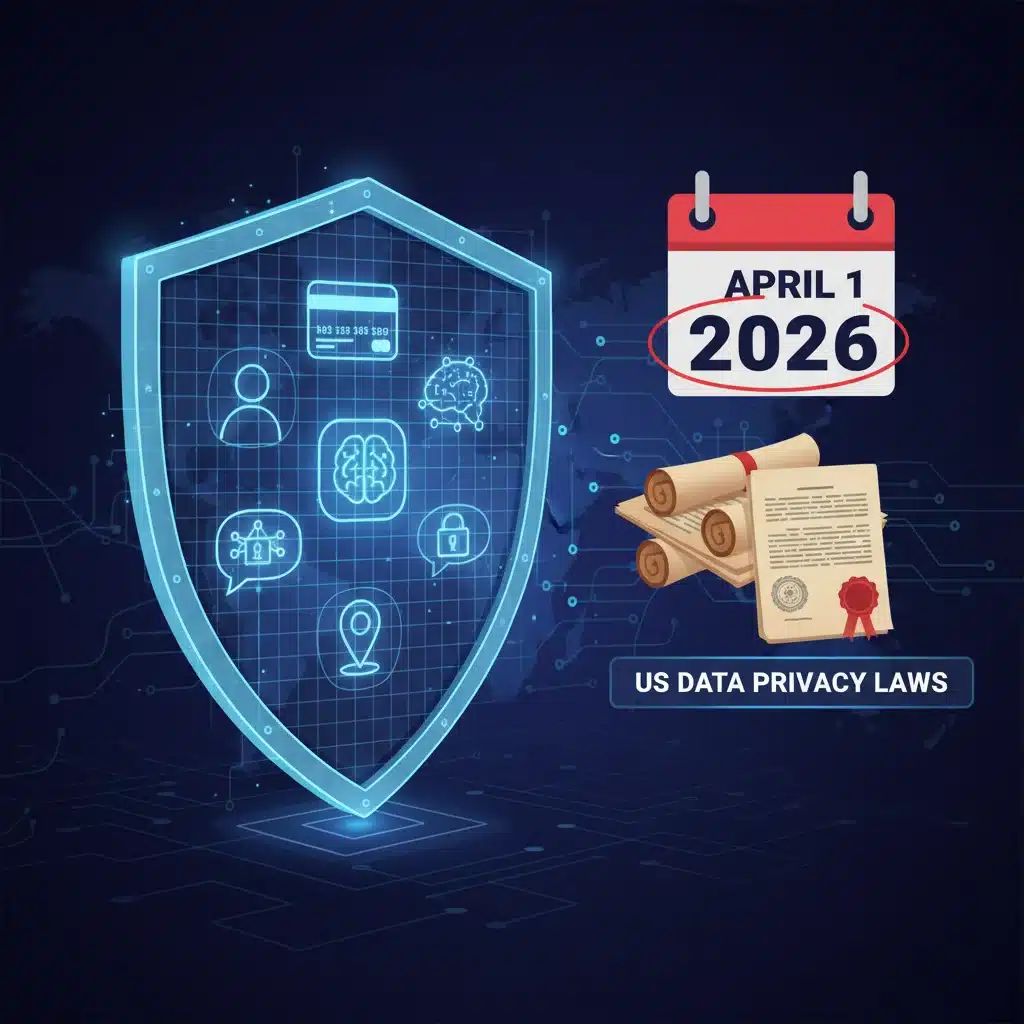
The digital age has brought unprecedented opportunities for businesses to connect with customers, innovate, and grow. However, this growth comes with a significant responsibility: protecting personal data. The United States, while historically having a fragmented approach to data privacy compared to regions like the European Union, is rapidly moving towards a more comprehensive regulatory landscape. The impending wave of new US data privacy laws, many of which are slated to become effective by April 1, 2026, marks a pivotal moment for businesses operating within or serving the U.S. market. Understanding and preparing for these changes is not merely a legal obligation but a strategic imperative for maintaining consumer trust and avoiding substantial penalties.
For many organizations, the sheer volume and complexity of these evolving regulations can be daunting. From understanding the nuances of state-specific laws to implementing robust data governance frameworks, the path to US Data Privacy Compliance requires a proactive and well-informed approach. This comprehensive guide aims to demystify the upcoming changes, highlight key compliance requirements, and provide actionable steps businesses can take to ensure they are ready for the April 1, 2026 deadline and beyond.
The Evolving Landscape of US Data Privacy: A Snapshot of What’s Coming
While a single federal data privacy law analogous to the GDPR in Europe has yet to materialize, the trend is clear: individual states are stepping up. Several states have already enacted comprehensive data privacy legislation, and many more are in various stages of proposing or passing their own versions. The staggered effective dates, with a significant cluster around April 1, 2026, mean businesses must juggle multiple, sometimes conflicting, requirements.
Anúncios
Key components often found in these new state laws include:
- Consumer Rights: Granting individuals greater control over their personal data, including rights to access, correction, deletion, and opting out of targeted advertising or sale of data.
- Data Minimization: Encouraging businesses to collect only the data necessary for stated purposes.
- Purpose Limitation: Restricting the use of collected data to the purposes for which it was originally gathered.
- Data Security: Mandating reasonable security measures to protect personal information.
- Data Protection Assessments (DPAs): Requiring assessments for high-risk processing activities.
- Universal Opt-Out Mechanisms: Some laws require recognition of universal opt-out signals, simplifying the process for consumers to exercise their privacy rights.
- Enforcement: Establishing clear mechanisms for state attorneys general or other designated bodies to enforce these laws, often with significant fines for non-compliance.
Understanding the specific requirements of each state where your business operates or collects data from residents is paramount for effective US Data Privacy Compliance. This patchwork approach necessitates a flexible yet robust compliance framework.
Anúncios
Pillars of US Data Privacy Compliance: What Businesses Need to Do
Achieving and maintaining compliance with the new wave of US data privacy laws requires a multi-faceted approach. Here are the essential pillars businesses should focus on:
1. Conduct a Comprehensive Data Inventory and Mapping
You cannot protect what you don’t know you have. The first critical step is to understand what personal data your organization collects, where it is stored, how it is used, who has access to it, and how long it is retained. This process, often referred to as data mapping, is foundational for all subsequent compliance efforts.
- Identify Data Categories: Catalog all types of personal data collected (e.g., names, addresses, email, IP addresses, browsing history, health data, financial data).
- Locate Data Stores: Pinpoint where this data resides (databases, cloud services, spreadsheets, physical files, third-party vendors).
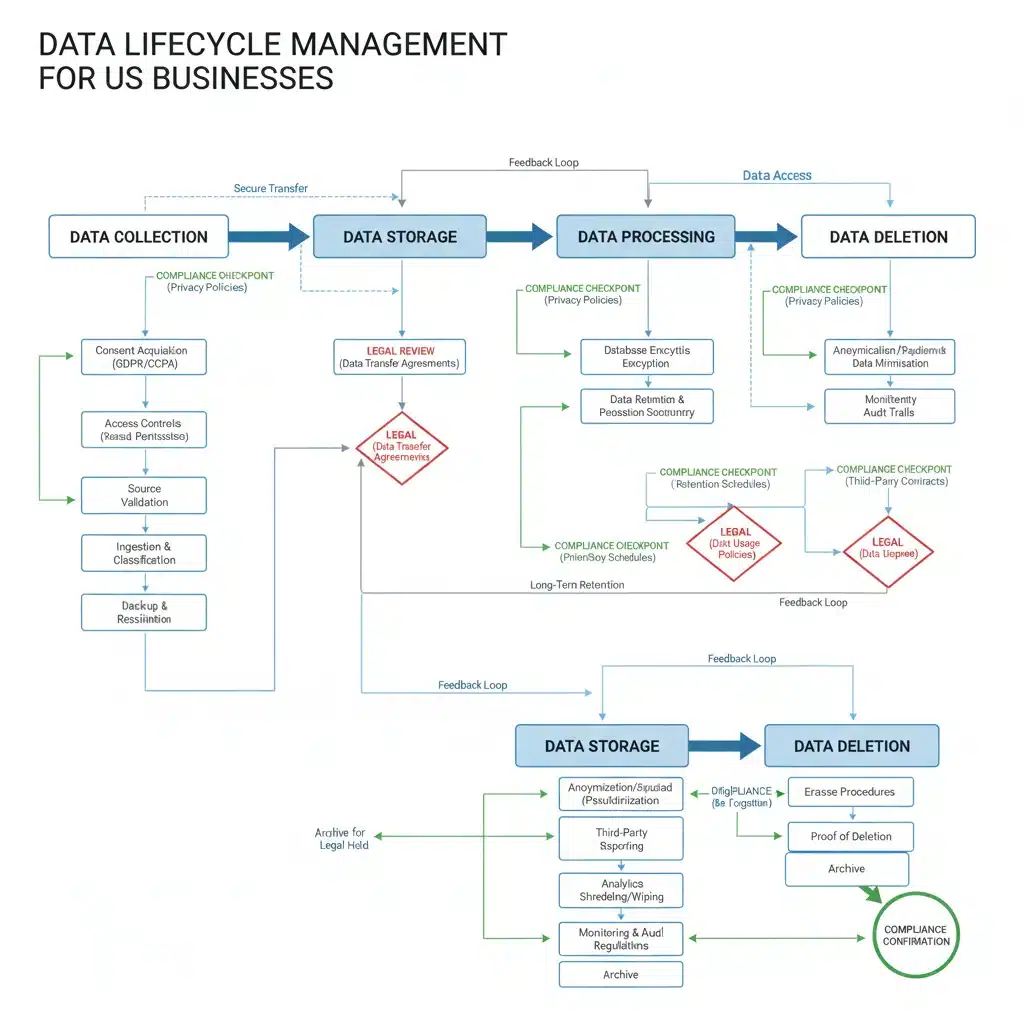
- Document Data Flows: Map how data moves within your organization and with external parties. Understand its lifecycle from collection to deletion.
- Assess Legal Basis: For each data processing activity, determine the legal basis (e.g., consent, contract, legitimate interest) under relevant privacy laws.
- Data Retention Policies: Establish and implement clear data retention schedules to ensure data is not kept longer than necessary.
A thorough data inventory provides the visibility needed to assess risks and implement targeted controls, making it a cornerstone of US Data Privacy Compliance.
2. Review and Update Privacy Policies and Notices
Transparency is a key principle of modern data privacy laws. Your privacy policy and other privacy notices must clearly and conspicuously inform individuals about your data practices. These documents need to be accurate, easy to understand, and regularly updated to reflect changes in your data processing activities and legal obligations.
- Clarity and Accessibility: Ensure policies are written in plain language, avoiding legal jargon, and are easily accessible on your website and other relevant platforms.
- Data Collection & Use: Explicitly state what data is collected, the purposes for collection, and how it will be used.
- Data Sharing: Disclose if and with whom data is shared (e.g., third-party vendors, advertisers) and for what purposes.
- Consumer Rights: Clearly outline the specific rights consumers have under applicable laws (e.g., right to access, delete, opt-out) and provide clear instructions on how to exercise these rights.
- Contact Information: Provide contact details for privacy inquiries or complaints.
- Update Frequency: Establish a schedule for regular review and updates to your privacy policies.
An outdated or unclear privacy policy can be a significant liability in the context of new US Data Privacy Compliance requirements.
3. Implement Robust Consumer Rights Management Mechanisms
The new laws empower consumers with significant rights over their data. Businesses must establish efficient and verifiable processes to handle these requests promptly and securely.
- Request Intake: Provide multiple, easily accessible channels for consumers to submit requests (e.g., web forms, toll-free numbers, email).
- Identity Verification: Implement reasonable measures to verify the identity of the requester to prevent unauthorized access to personal data.
- Processing & Fulfillment: Develop clear internal workflows for receiving, processing, and fulfilling various types of requests (access, deletion, correction, opt-out).
- Response Timelines: Adhere to the specific response timelines mandated by each applicable state law (typically 30-45 days).
- Record Keeping: Maintain thorough records of all consumer requests and your responses for audit purposes.
Failing to adequately address consumer rights requests is a common area of non-compliance and can lead to significant reputational damage and fines. Effective consumer rights management is central to proactive US Data Privacy Compliance.
4. Strengthen Data Security Measures
While data privacy focuses on how data is collected and used, data security is about protecting that data from unauthorized access, loss, or disclosure. Most new US data privacy laws implicitly or explicitly require businesses to implement reasonable security measures appropriate to the volume and sensitivity of the personal data they process.
- Risk Assessments: Conduct regular security risk assessments to identify vulnerabilities and threats to personal data.
- Technical Controls: Implement appropriate technical safeguards such as encryption, access controls, multi-factor authentication, intrusion detection systems, and secure coding practices.
- Organizational Controls: Develop and enforce strong internal policies, employee training, and incident response plans.
- Third-Party Security: Vet vendors and service providers to ensure they meet your security standards and include data security clauses in contracts.
- Incident Response Plan: Have a well-defined and tested plan for responding to data breaches, including notification procedures as required by state breach notification laws.
Robust data security is a fundamental component of any comprehensive US Data Privacy Compliance strategy, mitigating the risk of breaches that can lead to significant legal and financial repercussions.
5. Manage Third-Party Vendor Relationships
In today’s interconnected business environment, organizations often rely on numerous third-party vendors for data processing, storage, and analytics. These vendors can represent significant privacy and security risks if not properly managed. New privacy laws often extend compliance obligations to these third parties.
- Due Diligence: Conduct thorough due diligence on all vendors who process personal data on your behalf. Assess their security practices, privacy policies, and compliance certifications.
- Data Processing Agreements (DPAs): Ensure that robust Data Processing Agreements (or similar contractual clauses) are in place with all relevant vendors. These agreements should clearly define roles and responsibilities, data protection obligations, security requirements, and audit rights.
- Ongoing Monitoring: Regularly monitor vendor compliance through audits, security reviews, and performance evaluations.
- Data Minimization with Vendors: Only share the minimum necessary data with vendors required for them to perform their services.
Neglecting third-party vendor management can create significant compliance gaps, making it a critical area for US Data Privacy Compliance efforts.
6. Conduct Data Protection Assessments (DPAs) / Privacy Impact Assessments (PIAs)
Many new state laws require Data Protection Assessments (DPAs) or Privacy Impact Assessments (PIAs) for processing activities that present a heightened risk to consumer privacy. These assessments help identify and mitigate privacy risks before new systems or processes are implemented.
- Triggering Events: Understand when a DPA is required (e.g., processing sensitive data, targeted advertising, sale of personal data, large-scale profiling, new technologies).
- Assessment Process: Establish a systematic process for conducting DPAs, including identifying risks, evaluating safeguards, and documenting findings.
- Risk Mitigation: Implement identified risk mitigation strategies and reassess their effectiveness.
- Documentation: Maintain detailed records of all DPAs conducted, including the rationale for decisions and any risk acceptance.
DPAs are a proactive tool for embedding privacy-by-design principles into your operations, crucial for demonstrating proactive US Data Privacy Compliance.
7. Establish Data Governance and Accountability
Effective data privacy compliance is not a one-time project; it’s an ongoing commitment that requires strong internal governance and clear accountability. This includes assigning roles, establishing policies, and fostering a culture of privacy.
- Designate a Privacy Officer/Team: Appoint individuals or a team responsible for overseeing privacy compliance efforts. This could be a Data Protection Officer (DPO) or a dedicated privacy lead.
- Internal Policies & Procedures: Develop and disseminate clear internal policies and procedures for data handling, security, and privacy incident response.
- Employee Training: Conduct regular and mandatory privacy and security training for all employees, tailored to their roles and responsibilities.
- Audit & Monitoring: Implement internal audit and monitoring programs to regularly assess compliance with policies and legal requirements.
- Board/Executive Oversight: Ensure that privacy compliance has executive-level sponsorship and oversight to secure necessary resources and strategic alignment.
A strong data governance framework ensures that US Data Privacy Compliance is integrated into the fabric of your organization’s operations.

Key Considerations for Specific Industries and Data Types
While the general principles of US Data Privacy Compliance apply broadly, certain industries and types of data warrant additional attention. For instance:
- Healthcare: Continues to be governed by HIPAA, but new state laws may introduce additional layers of protection for health-related data not covered by HIPAA.
- Financial Services: Subject to GLBA and other financial regulations, which often overlap with and sometimes supersede general privacy laws.
- Children’s Data: COPPA remains the primary federal law, but state laws may introduce new requirements for parental consent and data processing for minors.
- Biometric Data: Several states have enacted specific laws (e.g., BIPA in Illinois) governing the collection and use of biometric identifiers, imposing strict consent requirements.
- Geolocation Data: Increasingly under scrutiny, with new laws often requiring explicit consent for its collection and use.
Businesses operating in these sensitive areas must ensure their compliance strategies consider both general privacy laws and sector-specific regulations to achieve holistic US Data Privacy Compliance.
Leveraging Technology for Compliance
Manual compliance efforts can quickly become overwhelming, especially for organizations handling large volumes of data or operating across multiple states. Technology plays a crucial role in streamlining and automating many aspects of US Data Privacy Compliance.
- Consent Management Platforms (CMPs): Tools to manage user consents for cookies, data collection, and processing, often integrating with website and app infrastructure.
- Data Discovery and Classification Tools: Automated solutions to identify, classify, and tag personal data across various systems, aiding in data mapping.
- Privacy Request Portals: Platforms that streamline the intake, verification, and fulfillment of consumer rights requests (DSARs – Data Subject Access Requests).
- Data Loss Prevention (DLP) Solutions: Technologies that prevent sensitive data from leaving the organization’s control.
- Security Information and Event Management (SIEM) Systems: Tools for real-time analysis of security alerts generated by applications and network hardware, crucial for breach detection.
- Privacy by Design Tools: Software development kits (SDKs) and frameworks that help embed privacy controls into applications and systems from the initial design phase.
Investing in the right privacy technology can significantly reduce the burden of compliance, improve efficiency, and enhance the overall effectiveness of your data protection program.
The Cost of Non-Compliance
The stakes for US Data Privacy Compliance are high. Non-compliance can result in severe consequences, including:
- Significant Fines: State attorneys general have the power to levy substantial civil penalties, often per violation, which can quickly accumulate.
- Legal Action: Increased risk of class-action lawsuits and private rights of action from affected individuals.
- Reputational Damage: Loss of consumer trust, negative publicity, and harm to brand image, which can be difficult and expensive to repair.
- Operational Disruption: Enforcement actions can lead to investigations, audits, and mandates to change business practices, disrupting operations.
- Loss of Business: Customers and partners may choose to disengage from companies with poor privacy track records.
The financial and reputational costs of non-compliance far outweigh the investment required to build a robust privacy program. Proactive compliance is a sound business decision.
Preparing for April 1, 2026: A Roadmap
With April 1, 2026, fast approaching, businesses need a clear roadmap to ensure they are ready. Here’s a summary of key actions:
- Form a Cross-Functional Team: Involve legal, IT, marketing, HR, and operations to ensure a holistic approach.
- Conduct a Legal Review: Identify all applicable state privacy laws based on your operations and customer base.
- Perform Data Mapping: Understand exactly what data you have and how it flows.
- Update Policies & Procedures: Revise privacy policies, internal data handling guidelines, and employee training modules.
- Enhance Security: Review and bolster your data security posture, including incident response plans.
- Refine Consumer Rights Processes: Ensure you can efficiently handle requests for access, deletion, correction, and opt-outs.
- Audit Third-Party Vendors: Review and update contracts with all data processors.
- Implement DPAs: Establish a process for conducting data protection assessments for high-risk activities.
- Regular Training: Educate employees on new policies and privacy best practices.
- Stay Informed: Continuously monitor new legislative developments and regulatory guidance.
This phased approach allows organizations to systematically address the various aspects of US Data Privacy Compliance, ensuring readiness for the impending deadlines.
Conclusion: Embracing Privacy as a Competitive Advantage
The new wave of US data privacy laws, with significant effective dates around April 1, 2026, represents a fundamental shift in how businesses must handle personal information. While the journey to comprehensive US Data Privacy Compliance can seem complex, it also presents an opportunity. Companies that prioritize privacy, treat personal data with respect, and build transparent practices will not only avoid penalties but will also foster greater trust with their customers. In an increasingly privacy-aware world, a strong commitment to data protection can become a significant competitive differentiator.
By proactively implementing the steps outlined in this guide – from robust data mapping and security measures to transparent policies and efficient consumer rights management – businesses can navigate this evolving regulatory landscape successfully. The time to act is now, laying the groundwork for sustainable, privacy-centric operations that benefit both the organization and its customers.
Staying abreast of these developments and adapting your strategies accordingly will be key to long-term success in the modern digital economy. Consult with legal and privacy experts to tailor these general guidelines to your specific business needs and ensure comprehensive preparedness for the new era of US data privacy.