Child Tax Credit 2026: Enhancements, Eligibility, and Family Impact

Anúncios
Child Tax Credit 2026: What Families Can Expect from the Latest Proposed Benefit Enhancements
As the calendar pages turn towards 2026, many American families are keenly watching the evolving landscape of tax policy, particularly concerning the Child Tax Credit (CTC). This vital federal program has been a cornerstone of support for millions of households, providing much-needed financial relief to help cover the costs of raising children. The discussions surrounding the Child Tax Credit 2026 are not just about numbers on a tax form; they represent potential significant shifts in economic stability and opportunity for families across the nation. Understanding these proposed changes, their potential impact, and what families can expect is crucial for effective financial planning and advocacy.
The CTC has a rich history of adaptation, evolving to meet the changing needs of American families. From its inception, it has aimed to alleviate the financial burden of child-rearing, recognizing the substantial costs associated with food, clothing, education, and healthcare for children. The most recent significant modifications during the COVID-19 pandemic, which temporarily expanded the credit, offered a glimpse into its potential as a powerful tool for poverty reduction and economic stimulus. As these temporary expansions have largely expired, the focus now shifts to future legislative efforts and the shape the Child Tax Credit 2026 might take.
This comprehensive guide will delve into the anticipated enhancements, explore the eligibility criteria under various proposals, and analyze the potential financial impact on families. We’ll examine the legislative proposals currently on the table, discuss the political dynamics influencing these decisions, and provide practical insights into how families can prepare for what’s to come. Whether you’re a parent, guardian, or simply interested in economic policy, understanding the nuances of the Child Tax Credit 2026 is essential.
Anúncios
The Evolution of the Child Tax Credit: A Brief History and Recent Changes
To fully grasp the significance of the Child Tax Credit 2026 discussions, it’s helpful to look back at how the CTC has evolved. Introduced in 1997, the CTC initially provided a non-refundable credit of $400 per child. Over the years, it has seen several adjustments, primarily aimed at increasing the credit amount and expanding eligibility to more low-income families. The Tax Cuts and Jobs Act (TCJA) of 2017 was a major milestone, doubling the credit to $2,000 per child and making $1,400 of it refundable. This expansion significantly benefited many middle and upper-income families, but its impact on the lowest-income households was limited due to the refundability cap.
The most dramatic, albeit temporary, changes came with the American Rescue Plan Act (ARPA) of 2021. This legislation increased the credit to $3,600 for children under six and $3,000 for children aged six to seventeen. Crucially, it made the entire credit fully refundable and allowed for advance monthly payments, effectively transforming it into a near-universal child allowance. The ARPA expansion had a profound impact, leading to a significant reduction in child poverty rates and providing a lifeline to millions of families during an unprecedented economic crisis. However, these enhancements expired at the end of 2021, reverting the credit to its TCJA parameters.
Anúncios
The expiration of the ARPA expansion has reignited debates about the future of the CTC. Advocates point to the dramatic success in reducing child poverty as a compelling reason to reinstate and make permanent the expanded benefits. Opponents often raise concerns about the cost of such programs and their potential impact on work incentives. These differing perspectives form the backdrop for the current legislative efforts to shape the Child Tax Credit 2026, with various proposals attempting to balance financial support for families with broader economic considerations.
Key Legislative Proposals for Child Tax Credit 2026
As we approach 2026, several legislative proposals are vying for attention, each offering a distinct vision for the future of the Child Tax Credit. These proposals largely aim to either restore some aspects of the ARPA expansion or introduce new modifications to the existing TCJA framework. Understanding these key proposals is essential for anticipating what the Child Tax Credit 2026 might look like.
1. Expanding Refundability and Credit Amounts
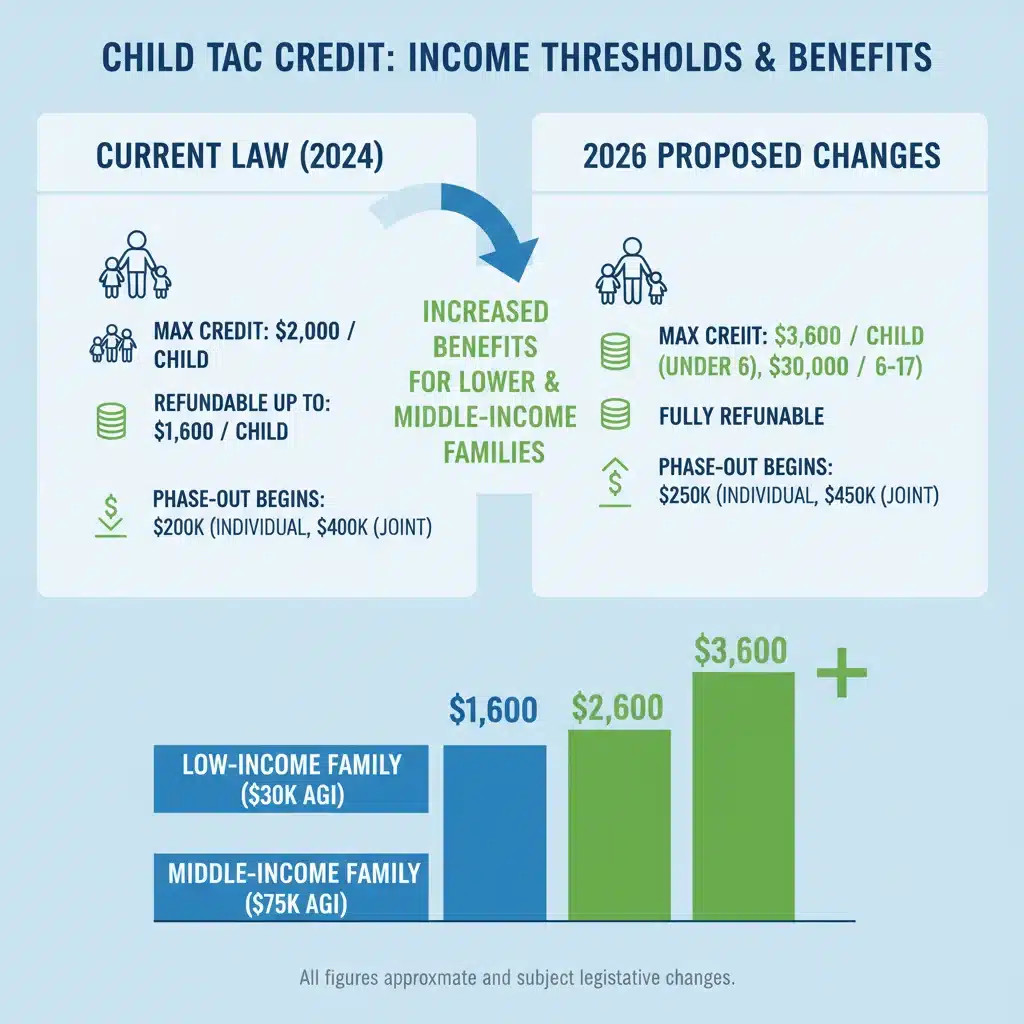
One of the most common themes across various proposals is the desire to enhance the credit’s refundability. The current TCJA framework limits the refundable portion to $1,600 (adjusted for inflation), leaving many low-income families unable to receive the full benefit because they don’t owe enough in taxes. Proposals often suggest making the credit fully refundable, similar to the ARPA expansion, ensuring that even families with little or no tax liability can receive the full amount. Some also advocate for increasing the maximum credit amount, potentially back to the $3,000 or $3,600 levels seen in 2021, or even higher.
For instance, one bipartisan proposal has recently gained traction, aiming to incrementally increase the refundable portion of the CTC and adjust it for inflation. This approach seeks a middle ground, providing more substantial benefits to low-income families without immediately reverting to the full ARPA expansion, which faces higher political hurdles. This kind of proposal could significantly alter the benefits families receive under the Child Tax Credit 2026.
2. Adjusting Income Thresholds and Phase-Outs
Another area of focus is adjusting the income thresholds for eligibility and the phase-out rates. Under the current law, the CTC begins to phase out at higher income levels (e.g., $400,000 for married couples filing jointly). Some proposals suggest lowering these phase-out thresholds to target benefits more specifically to middle and lower-income families, while others argue for maintaining higher thresholds to support a broader range of households. The debate often revolves around who should benefit most from the credit and how to balance broad support with fiscal responsibility.
Additionally, some proposals consider introducing a tiered system where younger children receive a higher credit amount, acknowledging the generally higher costs associated with infant and toddler care. This nuanced approach could mean that the specific age of your child significantly influences the amount you receive from the Child Tax Credit 2026.
3. Work Requirements and Other Conditions
The debate over work requirements often resurfaces in discussions about social programs, and the CTC is no exception. While the ARPA expansion had no work requirements, some conservative proposals suggest reintroducing or strengthening work requirements as a condition for receiving the full credit. This is a contentious issue, with advocates for families arguing that such requirements can penalize caregivers, particularly single parents or those with disabilities, while proponents argue they incentivize employment.
Other conditions, such as stricter definitions of qualifying children or residency requirements, might also be part of future legislative discussions. The specifics of these conditions will ultimately determine who is eligible for the Child Tax Credit 2026 and the extent of the benefits they can receive.
Eligibility for Child Tax Credit 2026: Who Qualifies?
Understanding who qualifies for the Child Tax Credit 2026 will be paramount for families planning their finances. While the exact criteria will depend on the final legislation, we can anticipate the core components of eligibility to remain similar to current and past iterations, with potential modifications based on the proposals discussed.
Qualifying Child Definition
The most fundamental aspect of eligibility is the definition of a "qualifying child." Under current law, a child must meet several criteria:
- Age: The child must be under age 17 at the end of the tax year. This means a 16-year-old child qualifies, but a 17-year-old does not. Some proposals seek to expand this age limit, potentially up to 18 or even 23 for full-time students, which would significantly broaden the impact of the Child Tax Credit 2026.
- Relationship: The child must be your son, daughter, stepchild, foster child, brother, sister, half-brother, half-sister, stepbrother, stepsister, or a descendant of any of them (e.g., a grandchild).
- Residency: The child must have lived with you for more than half of the tax year. There are exceptions for temporary absences due to illness, education, business, vacation, or military service.
- Support: The child must not have provided more than half of their own support for the year.
- Citizenship: The child must be a U.S. citizen, U.S. national, or U.S. resident alien.
Any changes to these fundamental definitions could alter the landscape of eligibility for the Child Tax Credit 2026, impacting how many families can benefit.
Income Requirements and Phase-Outs
Income remains a critical factor. Currently, the credit begins to phase out for single filers with a modified adjusted gross income (MAGI) exceeding $200,000, and for married couples filing jointly with a MAGI exceeding $400,000. These high thresholds mean that most middle and upper-income families qualify for at least some portion of the credit. However, as noted, the refundable portion of the credit is limited for lower-income families.
The key area of potential change for the Child Tax Credit 2026 lies in how these income thresholds and phase-outs are structured, especially concerning the refundable portion. If proposals to increase refundability are enacted, more low-income families would receive the full benefit, regardless of their tax liability, significantly boosting their financial stability. Conversely, if phase-out thresholds are lowered in some future legislation, it could reduce the benefit for some higher-income families.
Tax Filing Status
Your tax filing status also plays a role in determining your eligibility and the amount of credit you can receive. Generally, single, married filing jointly, head of household, and qualifying widow(er) statuses are eligible. Married filing separately can affect eligibility, often limiting the credit amount or making one spouse ineligible if the other claims the child.
As families plan for the Child Tax Credit 2026, understanding their specific filing status and how it interacts with income and qualifying child rules will be essential. It’s always advisable to consult with a tax professional or use reliable tax software to accurately determine eligibility.
Potential Financial Impact on American Families
The financial implications of the Child Tax Credit 2026, particularly if significant enhancements are enacted, cannot be overstated. For many families, this credit represents a critical source of funds that can alleviate financial stress, support child development, and even stimulate local economies.
Poverty Reduction
One of the most compelling arguments for an expanded CTC is its proven ability to reduce child poverty. The ARPA expansion, with its full refundability and increased amounts, demonstrated a dramatic reduction in child poverty rates, lifting millions of children out of destitution. If similar enhancements are implemented for the Child Tax Credit 2026, we could see a renewed effort to combat child poverty, providing a safety net for vulnerable families and improving long-term outcomes for children.
For low-income families, an enhanced CTC can mean the difference between struggling to meet basic needs and having enough resources for nutritious food, stable housing, and essential healthcare. This direct financial injection can have ripple effects, improving children’s health, educational attainment, and overall well-being.
Economic Stability and Growth
Beyond poverty reduction, the CTC plays a role in broader economic stability. When families have more disposable income, they are more likely to spend it on goods and services, thereby boosting consumer demand and supporting local businesses. This economic stimulus can be particularly impactful during periods of economic uncertainty or recovery.
Moreover, predictable and substantial child tax credits can help families weather unexpected financial shocks, reducing reliance on high-interest loans or other predatory financial products. This financial resilience is a key component of overall economic health, and the Child Tax Credit 2026 could be a significant contributor to this stability.
Impact on Middle-Income Families
While the focus is often on low-income families, middle-income households also stand to benefit significantly from an enhanced CTC. Raising children is expensive at all income levels, and a substantial credit can help offset costs like childcare, extracurricular activities, and educational expenses. For many middle-income families, the current $2,000 credit, while helpful, may not fully address the rising costs of living.
Proposals that increase the overall credit amount or adjust phase-out thresholds could provide greater relief to middle-income earners, allowing them to save more, invest in their children’s futures, or simply ease the burden of daily expenses. The specifics of the Child Tax Credit 2026 will determine the extent of this benefit for these families.
Political Landscape and Legislative Outlook for 2026
The path to any significant changes for the Child Tax Credit 2026 is inherently political, navigating the complexities of a divided Congress and differing ideological approaches to social welfare and fiscal policy. Understanding the current political landscape is crucial for predicting the likelihood and nature of future CTC reforms.
Bipartisan Efforts and Sticking Points
While the ARPA expansion was largely a partisan effort, there have been recent attempts at bipartisan compromise regarding the CTC. These efforts often focus on finding common ground, such as increasing the refundable portion of the credit incrementally, rather than a full return to ARPA levels. The challenge lies in balancing the desire to provide substantial support to low-income families with concerns about the overall cost of the program and potential impacts on work incentives.
Democrats generally advocate for a fully refundable and expanded credit, emphasizing its role in poverty reduction and economic equity. Republicans often express concerns about the cost and the potential for the credit to disincentivize work, preferring a credit that is tied more closely to earned income and subject to work requirements. These fundamental differences are the primary sticking points in negotiations for the Child Tax Credit 2026.
The electoral cycle will undoubtedly play a significant role in shaping the debate around the Child Tax Credit 2026. Major elections in 2024 will determine the composition of Congress and the presidency, directly influencing legislative priorities for the subsequent years. A shift in power could either accelerate or halt efforts to expand the CTC.
Upcoming Elections and Policy Priorities
Economic conditions will also be a major factor. If the economy faces headwinds, there might be increased pressure to implement policies that provide direct financial relief to families, making an expanded CTC a more attractive option. Conversely, if inflation remains a concern, lawmakers might be more cautious about large-scale spending programs.
The Role of Advocacy Groups and Public Opinion
Advocacy groups, child welfare organizations, and economic policy think tanks will continue to play a crucial role in shaping public opinion and lobbying lawmakers. Their research and public campaigns highlight the benefits of an expanded CTC, particularly its impact on child well-being and economic equity. Public opinion, often influenced by the real-world experiences of families who received the expanded credit in 2021, can also exert pressure on politicians to act.
Ultimately, the final form of the Child Tax Credit 2026 will be the result of complex negotiations, political will, and the prevailing economic and social conditions. Families should remain informed and engaged in these discussions as they unfold.

Preparing Your Family for Child Tax Credit Changes in 2026
While the exact details of the Child Tax Credit 2026 are still being debated, families can take several proactive steps to prepare for potential changes and ensure they are well-positioned to receive any benefits they are eligible for.
Stay Informed and Monitor Legislative Developments
The most crucial step is to stay informed. Follow reliable news sources, government announcements, and reputable tax policy organizations for updates on legislative proposals and debates. Websites of the IRS, Treasury Department, and non-partisan think tanks often provide accurate and timely information. Subscribing to newsletters from these organizations can ensure you receive updates directly as they become available.
Understanding the nuances of different proposals will help you anticipate how the Child Tax Credit 2026 might affect your specific family situation. Pay attention to discussions around credit amounts, refundability, age limits, and income thresholds.
Review Your Financial Situation and Records
Now is a good time to review your family’s financial situation. Ensure your income records, tax documents, and information about your dependents are up-to-date and easily accessible. This includes birth certificates, Social Security numbers for all children, and any documentation related to custody arrangements if applicable. Having these documents organized will streamline the process when it comes time to file your taxes or apply for any advance payments if they are reinstated for the Child Tax Credit 2026.
Consider your projected income for 2026. If your income is close to potential phase-out thresholds, understanding how different income scenarios might impact your credit amount can be beneficial for future planning. This foresight can help you make informed decisions about your financial future.
Consult with a Tax Professional
For personalized advice, especially if your family’s financial situation is complex, consulting with a qualified tax professional is highly recommended. A tax advisor can help you understand the current CTC rules, navigate any potential changes for the Child Tax Credit 2026, and advise on how to maximize your benefits. They can also help you understand how the CTC interacts with other tax credits and deductions your family might be eligible for.
Tax professionals stay abreast of the latest tax laws and can provide guidance tailored to your specific circumstances, ensuring you don’t miss out on any eligible credits or face unexpected tax liabilities.
Adjust Your Budget and Savings Strategy
While waiting for definitive legislation, consider how an expanded or modified CTC might fit into your family’s budget. If you anticipate receiving a larger credit, you might begin thinking about how those funds could be best utilized – whether for savings, debt reduction, educational expenses, or other family needs. Conversely, if the Child Tax Credit 2026 remains unchanged or offers fewer benefits than anticipated, it’s wise to adjust your budget accordingly to avoid any financial shortfalls.
Building an emergency fund is always a sound financial strategy, and any additional funds from an enhanced CTC could contribute significantly to this goal, providing a buffer against unforeseen expenses.
Beyond the Numbers: The Broader Social and Economic Implications
The discussions surrounding the Child Tax Credit 2026 extend far beyond the direct financial benefits to individual families. This policy has profound broader social and economic implications that are important to consider.
Impact on Child Development and Education
Research has consistently shown that direct financial support to families can have a positive impact on child development. When families have more resources, they can provide better nutrition, access to quality childcare, educational materials, and healthcare. These investments in early childhood can lead to improved cognitive development, better academic outcomes, and long-term success for children.
An enhanced Child Tax Credit 2026 could therefore be seen as an investment in human capital, fostering a healthier, better-educated future generation. This long-term societal benefit is a powerful argument for maintaining and expanding the credit.
Addressing Income Inequality
The CTC, particularly its refundable component, is a crucial tool for addressing income inequality. By providing financial support directly to low and moderate-income families, it helps to narrow the gap between the wealthiest and poorest households. This can lead to a more equitable society, with greater opportunities for all children, regardless of their parents’ income level.
The debate around the Child Tax Credit 2026 is, in many ways, a debate about the kind of society we want to build – one where every child has a fair shot at success.
Workforce Participation and Economic Productivity
While some argue that an expanded CTC might disincentivize work, many studies suggest the opposite. By reducing financial stress and making childcare more affordable, an enhanced CTC can enable parents, particularly mothers, to enter or remain in the workforce. This increased workforce participation can boost economic productivity and growth.
Furthermore, by supporting families, the CTC can indirectly contribute to a more stable and productive workforce, reducing employee turnover and improving overall economic efficiency. The long-term effects of the Child Tax Credit 2026 on workforce dynamics will be an important area of observation.
Conclusion: The Future of Family Support in America
The future of the Child Tax Credit 2026 is a topic of immense importance for millions of American families. While the specific legislative outcomes remain uncertain, the ongoing discussions underscore a broader societal commitment to supporting children and alleviating the financial pressures on households. From expanding refundability and increasing credit amounts to adjusting eligibility criteria, each proposed change carries the potential to significantly alter the financial landscape for parents and guardians across the nation.
As families look ahead, staying informed about legislative developments, meticulously reviewing personal financial records, and seeking professional tax advice will be key to navigating these changes effectively. The potential enhancements to the CTC are not merely about tax benefits; they represent an opportunity to reduce child poverty, foster economic stability, and invest in the long-term well-being and development of America’s children.
The debate surrounding the Child Tax Credit 2026 is a testament to its critical role in national policy. As lawmakers continue their deliberations, the hope remains that a consensus can be reached that prioritizes the needs of children and families, providing them with the resources necessary to thrive in an ever-changing economic environment. By understanding the history, current proposals, and potential impacts, families can better prepare for what 2026 may bring and advocate for policies that truly support their needs.