Economic Outlook 2026: Experts Predict 2.5% GDP Growth Amidst Global Shifts
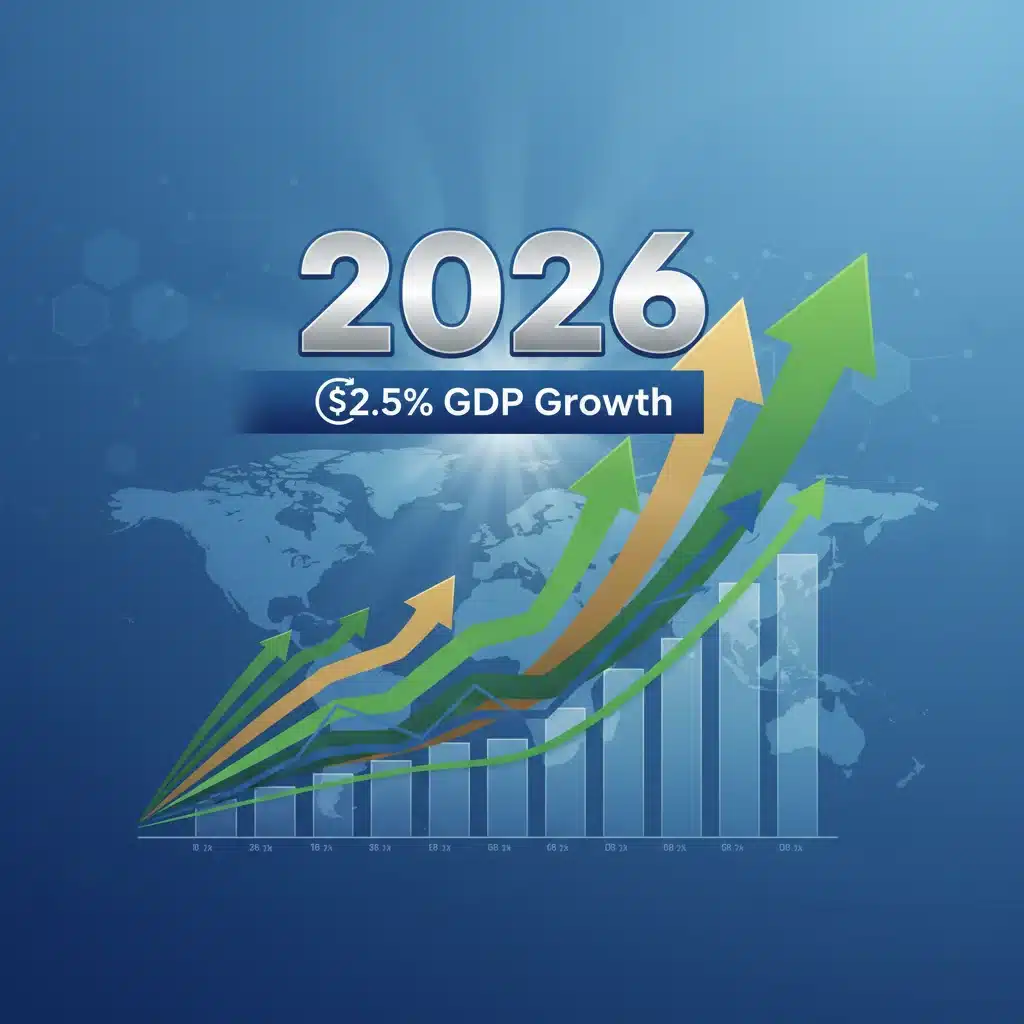
As we navigate the complexities of the current global landscape, the anticipation for future economic stability and growth intensifies. The Economic Outlook 2026 is a topic of paramount importance for policymakers, businesses, and individuals alike, offering a glimpse into the potential trajectory of global markets. Expert consensus points towards a modest yet resilient 2.5% GDP growth, a figure that, while not exceptionally robust, signals a period of cautious optimism and strategic adaptation amidst ongoing global shifts. This comprehensive analysis delves into the multifaceted factors influencing this prediction, examining the interplay of geopolitical dynamics, technological advancements, inflationary pressures, and evolving consumer behaviors.
The year 2026 is poised to be a pivotal moment, characterized by a recalibration of economic forces. Following a period of significant volatility driven by pandemics, supply chain disruptions, and geopolitical tensions, the global economy is expected to find a new equilibrium. This equilibrium, however, will not be without its challenges, requiring proactive measures and innovative solutions to sustain growth. Understanding the nuances of the Economic Outlook 2026 is crucial for informed decision-making and strategic planning.
Understanding the Global Economic Landscape Leading to 2026
Before we delve into the specifics of the Economic Outlook 2026, it is essential to contextualize the current global economic environment. The past few years have been marked by unprecedented events that have reshaped economic paradigms. The COVID-19 pandemic triggered a massive economic contraction, followed by a rapid, albeit uneven, recovery. This recovery was fueled by extensive fiscal and monetary stimuli, which, while necessary, contributed to inflationary pressures that have become a persistent concern for central banks worldwide.
Geopolitical tensions, particularly the conflict in Eastern Europe, have further complicated the economic picture, leading to energy price shocks, disruptions in global trade routes, and increased uncertainty. These events have underscored the interconnectedness of the global economy and the vulnerability of supply chains to external shocks. Furthermore, the ongoing competition between major economic powers continues to influence trade policies, technological development, and investment flows, adding another layer of complexity to the Economic Outlook 2026.
Anúncios
Amidst these challenges, several economies have demonstrated remarkable resilience, adapting to new realities and leveraging technological advancements to foster growth. The digital transformation, accelerated by the pandemic, has opened new avenues for innovation and productivity gains. E-commerce, remote work, and automation have become integral parts of the economic fabric, altering consumer habits and business models. These shifts will undoubtedly play a significant role in shaping the economic trajectory towards 2026 and beyond.
The labor market has also undergone significant transformations, with shifts in demand for certain skills and an increasing focus on flexibility and adaptability. Wage growth, while welcome for workers, has also contributed to inflationary pressures, creating a delicate balancing act for policymakers aiming to achieve stable prices without stifling economic activity. All these factors collectively form the backdrop against which the predictions for the Economic Outlook 2026 are made.
Anúncios
Key Drivers of the 2.5% GDP Growth Prediction for 2026
The prediction of 2.5% GDP growth for the Economic Outlook 2026 is not an arbitrary figure; it is the culmination of careful analysis of several key economic drivers. These drivers, both positive and challenging, will collectively determine the pace and nature of global economic expansion.
Stabilization of Inflationary Pressures
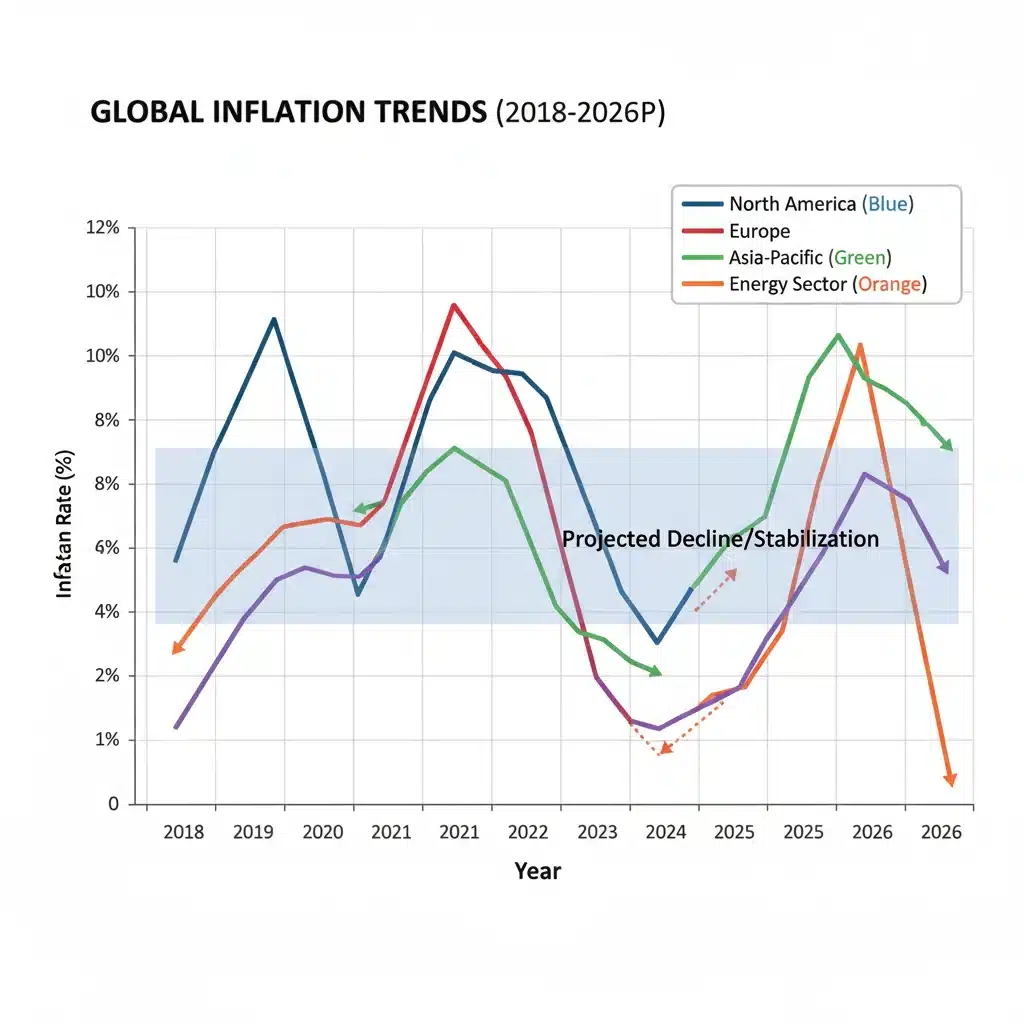
One of the most significant factors influencing the 2026 forecast is the anticipated stabilization, and in some regions, a gradual decline, of inflationary pressures. Central banks globally have been aggressively raising interest rates to combat high inflation, a policy that is expected to yield results by 2026. As supply chains normalize and demand moderates, the cost of goods and services should become more predictable. This stability is crucial for business investment and consumer confidence, laying a foundation for sustainable growth. However, the path to disinflation is not linear, and unexpected shocks could still derail these efforts. The effectiveness of monetary policy in achieving a ‘soft landing’ – curbing inflation without triggering a severe recession – will be a critical determinant of the Economic Outlook 2026.
Resilient Consumer Spending and Business Investment
Despite recent economic headwinds, consumer spending has shown remarkable resilience in many parts of the world. As economies stabilize and labor markets remain relatively strong, consumers are expected to continue driving demand for goods and services. Coupled with this, business investment is projected to pick up, especially in areas related to digital transformation, renewable energy, and infrastructure development. Companies are increasingly investing in automation and AI to enhance productivity and efficiency, which will contribute to overall economic growth. This renewed focus on capital expenditure will be a vital component of the positive Economic Outlook 2026.
Technological Advancements and Innovation
Technological innovation remains a powerful engine of economic growth. By 2026, advancements in artificial intelligence, biotechnology, quantum computing, and sustainable technologies are expected to reach new levels of maturity, leading to significant productivity gains and the creation of new industries. The widespread adoption of 5G technology, the expansion of the Internet of Things (IoT), and continued progress in renewable energy solutions will not only transform existing sectors but also open up entirely new markets. These innovations will fuel investment, create high-value jobs, and enhance global competitiveness, playing a pivotal role in the Economic Outlook 2026.
Global Trade Reconfiguration and Regionalization
The global trade landscape is undergoing a significant reconfiguration. While globalization remains a dominant force, there is an increasing trend towards regionalization and the diversification of supply chains to enhance resilience. Countries are seeking to reduce their dependence on single suppliers and cultivate stronger regional trade blocs. This shift, while potentially leading to some short-term adjustments, is expected to create more stable and predictable trade environments in the long run. The optimization of trade agreements and the development of new trade corridors will contribute positively to the Economic Outlook 2026, fostering greater economic integration and efficiency within regions.
Potential Headwinds and Risks to the 2026 Economic Outlook
While the 2.5% GDP growth prediction for the Economic Outlook 2026 offers a degree of optimism, it is crucial to acknowledge the potential headwinds and risks that could impact this forecast. The global economy is a complex system, and various factors could either accelerate or decelerate the projected growth.
Persistent Inflationary Pressures
Despite expectations of stabilization, inflation could prove more stubborn than anticipated. Unexpected supply shocks, such as further geopolitical conflicts or natural disasters, could trigger new spikes in energy or food prices. Additionally, strong wage growth without corresponding productivity gains could lead to a wage-price spiral, making it difficult for central banks to bring inflation back to target levels. A prolonged period of high inflation would erode purchasing power, dampen consumer confidence, and force central banks to maintain restrictive monetary policies for longer, potentially leading to a sharper economic slowdown than currently projected for the Economic Outlook 2026.
Geopolitical Instability
Geopolitical tensions remain a significant wildcard. Escalations in existing conflicts or the emergence of new ones could disrupt trade routes, energy supplies, and financial markets. Such events introduce uncertainty, deter investment, and can trigger capital flight, negatively impacting global growth. The ongoing competition between major powers, particularly in technology and trade, also poses risks, potentially leading to increased protectionism and fragmentation of the global economy. These factors could significantly alter the positive trajectory envisioned in the Economic Outlook 2026.
Financial Market Volatility
Global financial markets are inherently sensitive to economic news, policy changes, and geopolitical events. High levels of public and private debt in many countries could make financial systems vulnerable to interest rate hikes or economic downturns. A significant correction in asset prices, such as in equity or real estate markets, could lead to a reduction in household wealth and business investment, thereby impacting overall economic activity. Moreover, the increasing complexity of financial instruments and the rapid flow of capital across borders mean that market volatility could spread quickly, posing a risk to the stability of the Economic Outlook 2026.
Climate Change and Environmental Risks
The increasing frequency and intensity of extreme weather events due to climate change pose direct economic risks. Natural disasters can cause significant damage to infrastructure, disrupt agricultural production, and displace populations, leading to substantial economic losses. The transition to a greener economy, while necessary, also presents challenges. Policies aimed at decarbonization could lead to stranded assets in traditional industries, job displacement, and increased energy costs in the short term. Managing this transition effectively will be crucial to mitigating its potential negative impacts on the Economic Outlook 2026.
Regional Economic Projections within the Global Outlook
The 2.5% GDP growth for the Economic Outlook 2026 is a global aggregate, and it masks significant variations at the regional level. Different regions will experience distinct growth patterns influenced by their unique economic structures, policy frameworks, and exposure to global trends.
North America: Steady but Slower Growth
The United States and Canada are expected to maintain steady, albeit slower, growth rates. The U.S. economy, driven by robust domestic demand and technological innovation, will likely see moderate expansion. However, higher interest rates aimed at curbing inflation could temper consumer spending and business investment. Canada’s economy will largely follow suit, with its resource-rich sectors providing a degree of stability. Both countries will continue to grapple with labor market dynamics and the need for skilled workers, factors that will shape their contribution to the Economic Outlook 2026.
Europe: Navigating Energy Transitions and Geopolitical Shifts
Europe’s economic landscape for 2026 will be heavily influenced by its energy transition efforts and ongoing geopolitical uncertainties. While the eurozone is expected to recover from recent energy shocks, growth will likely be modest. Investment in renewable energy and green technologies will be a key driver, but structural challenges, demographic shifts, and the need for fiscal consolidation in some member states could constrain faster expansion. The UK’s economic performance will continue to be shaped by its post-Brexit trade relationships and domestic policy choices, contributing uniquely to the overall Economic Outlook 2026.
Asia-Pacific: The Engine of Global Growth
The Asia-Pacific region is anticipated to remain the primary engine of global growth. China, despite facing structural adjustments and a real estate sector slowdown, is expected to contribute significantly, albeit at a moderated pace compared to previous decades. India is projected to be one of the fastest-growing major economies, driven by strong domestic demand, demographic dividends, and ongoing structural reforms. Southeast Asian nations will benefit from diversified manufacturing bases and increasing regional trade integration. The region’s technological prowess and growing middle class will be crucial for the overall positive Economic Outlook 2026.

Latin America and Africa: Harnessing Potential Amidst Challenges
Latin America and Africa present a mixed bag of opportunities and challenges. Resource-rich nations in both continents could benefit from stable commodity prices, but structural reforms, political stability, and investment in infrastructure will be critical for sustainable growth. Diversification away from commodity dependence and fostering innovation will be key to unlocking their full economic potential. While facing significant hurdles, these regions have immense untapped potential that could surprise positively within the Economic Outlook 2026, provided the right policies and investments are in place.
Policy Implications and Strategic Responses for 2026
Given the nuanced Economic Outlook 2026, policymakers, businesses, and individuals must adopt strategic responses to navigate the anticipated landscape effectively. The focus should be on fostering resilience, promoting sustainable growth, and mitigating potential risks.
For Policymakers: Balancing Act of Fiscal and Monetary Policies
Policymakers face a delicate balancing act. Central banks will need to remain vigilant in managing inflation while avoiding an overly restrictive stance that could trigger a recession. Fiscal policies should prioritize investments in infrastructure, education, and green technologies to boost long-term productivity and address climate change. International cooperation will be essential to address global challenges such as climate change, trade disputes, and financial stability. Governments should also focus on creating supportive regulatory environments that encourage innovation and attract foreign direct investment, thereby enhancing the positive aspects of the Economic Outlook 2026.
For Businesses: Adaptation, Innovation, and Resilience
Businesses must prioritize adaptation, innovation, and resilience. Investing in digital transformation, automation, and AI will be crucial for enhancing efficiency and competitiveness. Diversifying supply chains and building robust risk management frameworks will help mitigate disruptions. Furthermore, businesses should focus on sustainable practices, not only to meet regulatory requirements but also to appeal to environmentally conscious consumers and investors. Identifying new growth markets and adapting business models to evolving consumer preferences will be key to thriving within the Economic Outlook 2026.
For Individuals: Financial Prudence and Skill Development
Individuals should focus on financial prudence, including saving and investing wisely, and managing debt effectively. Continuous skill development and lifelong learning will be critical to staying relevant in an evolving labor market. Adapting to new technologies and acquiring in-demand skills will enhance employability and career progression. Understanding the broader economic trends outlined in the Economic Outlook 2026 can help individuals make informed decisions about their careers, investments, and overall financial well-being.
The Role of Sustainability and Green Initiatives in 2026
Sustainability and green initiatives are not just environmental imperatives; they are becoming increasingly integral to the global Economic Outlook 2026. The shift towards a low-carbon economy presents both challenges and immense opportunities for innovation, investment, and job creation.
Governments worldwide are implementing policies to accelerate the transition to renewable energy sources, promote energy efficiency, and encourage sustainable consumption and production. This includes carbon pricing mechanisms, subsidies for green technologies, and stricter environmental regulations. These policies will drive significant investment in sectors such as solar, wind, and hydrogen energy, electric vehicles, and sustainable agriculture. Businesses that embrace these changes early on will gain a competitive advantage, while those that lag behind may face increasing regulatory burdens and consumer scrutiny.
The financial sector is also playing a crucial role, with a growing emphasis on green finance and sustainable investing. Investors are increasingly channeling capital towards companies with strong environmental, social, and governance (ESG) credentials. This trend is pushing corporations to adopt more sustainable practices, not just for ethical reasons but also for financial viability and access to capital. The development of new green technologies and business models will create new industries and markets, contributing significantly to economic growth and shaping the positive aspects of the Economic Outlook 2026.
However, the transition is not without its complexities. Ensuring a just transition that addresses potential job losses in traditional industries and supports affected communities will be crucial. Developing robust supply chains for green technologies, managing the costs of transition, and fostering international collaboration on climate solutions are all critical factors that will influence how smoothly this shift impacts the Economic Outlook 2026.
Conclusion: A Cautiously Optimistic Economic Outlook for 2026
The Economic Outlook 2026, with its prediction of 2.5% GDP growth, paints a picture of cautious optimism. The global economy is expected to find its footing after a turbulent period, driven by stabilizing inflation, resilient consumer and business activity, and ongoing technological advancements. However, this growth trajectory is not guaranteed and remains susceptible to a range of risks, including persistent inflationary pressures, geopolitical instability, and financial market volatility.
Successfully navigating the economic landscape towards 2026 will require strategic foresight, adaptability, and collaborative efforts from all stakeholders. Policymakers must strike a balance between stimulating growth and maintaining financial stability. Businesses must embrace innovation and build resilience into their operations. Individuals must prioritize financial prudence and continuous learning.
The increasing emphasis on sustainability and green initiatives will also play a transformative role, offering new avenues for growth and investment while addressing critical environmental challenges. As we move closer to 2026, continuous monitoring of key economic indicators and a flexible approach to policy and business strategies will be paramount. The journey ahead promises to be dynamic, but with proactive measures and a clear understanding of the forces at play, the global economy can achieve sustainable and inclusive growth.