Cybersecurity Alert: Federal Agencies Warn of Increased Threats in Q1 2026
Anúncios
In an era defined by rapid digital transformation, the landscape of cybersecurity is constantly shifting, presenting both unprecedented opportunities and formidable challenges. Federal agencies, custodians of vast amounts of sensitive national data and critical infrastructure, find themselves at the forefront of this digital battlefield. Recent intelligence reports and joint advisories from leading federal cybersecurity bodies indicate an alarming forecast: a significant escalation in Federal Cybersecurity Threats is anticipated for the first quarter of 2026. This is not merely a routine warning but a grave alert, underscoring a projected surge in sophisticated and impactful cyberattacks targeting governmental entities and, by extension, private sector partners.
The confluence of geopolitical tensions, the proliferation of advanced persistent threat (APT) groups, and the increasing sophistication of cybercriminal syndicates has created a perfect storm. These actors are continually refining their tactics, techniques, and procedures (TTPs), making detection and prevention more challenging than ever. This article delves deep into the nature of these impending threats, dissects the warnings issued by federal agencies, explores the potential ramifications for national security and economic stability, and, most importantly, outlines actionable strategies for bolstering digital resilience across all sectors. Understanding the nuances of these Federal Cybersecurity Threats is the first step toward effective defense.
The Looming Storm: Understanding the Q1 2026 Threat Landscape
Anúncios
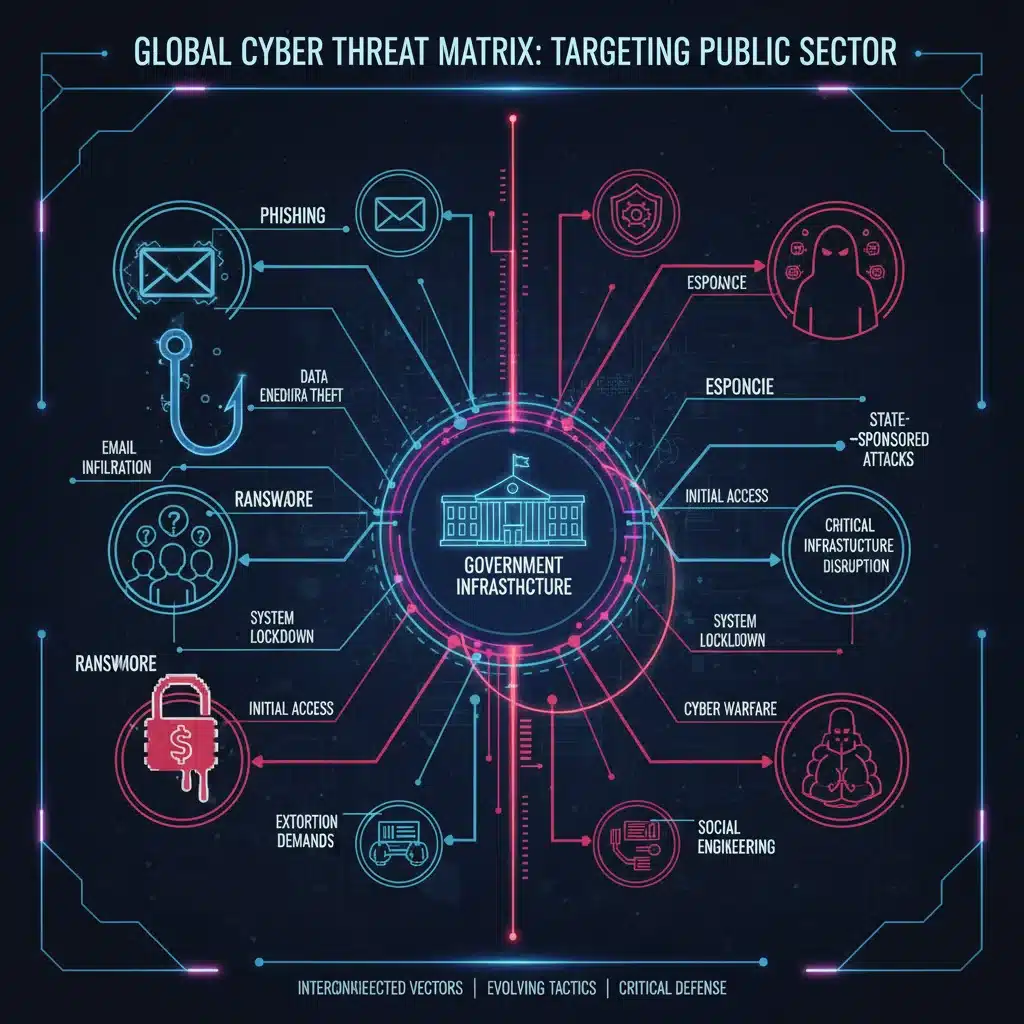
The warnings from federal agencies are not abstract; they are based on concrete intelligence gathering and threat analysis. Several key factors contribute to the heightened risk profile for Q1 2026. Firstly, the ongoing geopolitical instability globally often spills over into cyberspace, with state-sponsored actors engaging in espionage, sabotage, and intellectual property theft. These groups possess significant resources and expertise, enabling them to launch highly targeted and persistent attacks. Their primary objectives often include disrupting critical infrastructure, stealing sensitive government data, and influencing public opinion.
Anúncios
Secondly, the evolution of ransomware continues to pose a severe and pervasive threat. While ransomware has been a consistent menace, the next evolution involves more sophisticated extortion tactics, including double and triple extortion, where data is not only encrypted but also exfiltrated and threatened with public release, and victims are pressured through their business partners or customers. Ransomware-as-a-Service (RaaS) models have also lowered the barrier to entry for less sophisticated actors, increasing the volume and diversity of attacks. Federal agencies, due to the critical nature of their data and services, are prime targets for these financially motivated attacks.
Thirdly, supply chain attacks are becoming increasingly prevalent and dangerous. Cyber adversaries are exploiting vulnerabilities in the software supply chain, targeting trusted third-party vendors to gain access to their ultimate targets – often federal agencies. The compromise of a single component or service provider can have a cascading effect, impacting numerous downstream organizations. This method allows attackers to bypass robust direct defenses by exploiting weaker links in the broader ecosystem.
Finally, the rapid adoption of emerging technologies, such as artificial intelligence (AI) and quantum computing, while offering immense benefits, also introduces new attack surfaces and complexities. AI can be leveraged by attackers to automate and scale their operations, create more convincing phishing campaigns, and discover vulnerabilities more rapidly. The eventual advent of quantum computing poses a long-term threat to current cryptographic standards, necessitating proactive research and development in post-quantum cryptography. These emerging vectors compound the challenges in managing Federal Cybersecurity Threats.
Key Warnings from Federal Agencies
Several prominent federal agencies have collaboratively issued warnings, highlighting specific vulnerabilities and anticipated attack methodologies. The Cybersecurity and Infrastructure Security Agency (CISA), the Federal Bureau of Investigation (FBI), and the National Security Agency (NSA) are often at the forefront of these advisories. Their collective intelligence points to a few critical areas of concern:
1. Exploitation of Unpatched Vulnerabilities
A recurring theme in cybersecurity breaches is the failure to patch known vulnerabilities promptly. Adversaries actively scan for and exploit publicly disclosed vulnerabilities (CVEs) in operating systems, applications, and network devices. Federal agencies are urged to prioritize patch management and implement robust vulnerability scanning programs. The Q1 2026 forecast specifically emphasizes an expected surge in exploits targeting newly disclosed critical vulnerabilities, often within days or even hours of their public release. This ‘patch or perish’ mentality is more critical than ever.
2. Phishing and Social Engineering Campaigns
Despite advancements in technical defenses, the human element remains the weakest link. Phishing, spear-phishing, and other social engineering tactics continue to be highly effective initial access vectors for cybercriminals and state-sponsored actors. The warnings suggest an increase in highly personalized and sophisticated campaigns, often leveraging current events or trusted brands to trick employees into revealing credentials or installing malware. Training and awareness programs are paramount in mitigating these Federal Cybersecurity Threats.
3. Insider Threats
While external threats often dominate headlines, insider threats, whether malicious or accidental, pose a significant risk. Disgruntled employees, individuals susceptible to blackmail, or simply negligent staff can inadvertently or intentionally compromise sensitive systems and data. Federal agencies are advised to strengthen access controls, implement robust monitoring, and foster a culture of security awareness to detect and deter insider risks.
4. Critical Infrastructure Targets
The energy, water, transportation, and healthcare sectors are specifically highlighted as potential targets. Disruptions to these critical infrastructures can have severe societal and economic consequences. Attackers may seek to disrupt services, steal operational data, or hold systems for ransom. Protecting operational technology (OT) and industrial control systems (ICS) from cyber incursions is a top priority for national security. The convergence of IT and OT networks creates new challenges, making comprehensive security strategies essential.
Implications for Government and Private Sectors
The ripple effect of increased Federal Cybersecurity Threats extends far beyond government networks. The interconnected nature of modern economies means that a breach in one sector can rapidly impact others. Private sector companies that contract with federal agencies, or those that are part of critical infrastructure, are particularly vulnerable.
For Government Agencies:
- Operational Disruption: Attacks can lead to the shutdown of essential government services, impacting citizens and national operations.
- Data Compromise: Theft of classified information, personal data of citizens, or intellectual property can have severe national security and privacy implications.
- Erosion of Trust: Repeated breaches can erode public trust in government’s ability to protect sensitive information and maintain essential services.
- Financial Costs: The cost of responding to and recovering from a cyberattack, including legal fees, public relations, and system remediation, can be astronomical.
For Private Sector:
- Supply Chain Risk: Companies in the federal supply chain face increased scrutiny and are often targeted as stepping stones to government networks.
- Regulatory Pressure: Heightened threats often lead to stricter compliance requirements and reporting obligations for companies dealing with federal data.
- Reputational Damage: A breach, especially one linked to federal data, can severely damage a company’s reputation and lead to loss of contracts.
- Intellectual Property Theft: Adversaries may target private companies for their innovations and trade secrets, particularly those involved in defense or critical technologies.
Proactive Measures and Mitigation Strategies
Responding to these elevated Federal Cybersecurity Threats requires a multi-faceted and proactive approach. Both government and private entities must invest in robust security architectures, foster a culture of cybersecurity, and embrace continuous improvement.
1. Strengthen Foundational Cybersecurity Practices
Many successful attacks exploit basic security hygiene failures. Agencies must reinforce foundational practices:
- Patch Management: Implement an aggressive and consistent patch management program for all systems and applications. Prioritize critical vulnerabilities.
- Multi-Factor Authentication (MFA): Mandate MFA for all users, especially for privileged accounts and remote access.
- Access Control: Implement the principle of least privilege, ensuring users only have access to resources absolutely necessary for their job functions. Regularly review and revoke unnecessary access.
- Endpoint Detection and Response (EDR): Deploy advanced EDR solutions to monitor endpoints for malicious activity and respond quickly to threats.
- Network Segmentation: Segment networks to limit the lateral movement of attackers in the event of a breach. Isolate critical systems.
2. Enhance Threat Intelligence Sharing and Collaboration
Information sharing is critical in the fight against sophisticated cyber adversaries. Federal agencies must enhance their collaboration with each other, with state and local governments, and with private sector partners. Platforms like CISA’s Automated Indicator Sharing (AIS) program facilitate real-time sharing of threat indicators. Participation in Information Sharing and Analysis Centers (ISACs) relevant to specific sectors is also vital. The more organizations share intelligence about emerging Federal Cybersecurity Threats, the better equipped the collective defense becomes.
3. Invest in Human Capital and Training
Technology alone cannot solve the cybersecurity challenge. A skilled and aware workforce is indispensable. Agencies should:
- Security Awareness Training: Conduct regular, engaging, and updated security awareness training for all employees, focusing on recognizing phishing, social engineering, and safe internet practices.
- Cybersecurity Workforce Development: Invest in training and recruiting cybersecurity professionals to fill critical skill gaps. This includes specialized training in areas like incident response, threat hunting, and cloud security.
- Tabletop Exercises: Regularly conduct tabletop exercises and simulations to test incident response plans and identify areas for improvement.
4. Implement Zero Trust Architecture
The traditional perimeter-based security model is increasingly insufficient against modern threats. Zero Trust Architecture (ZTA) operates on the principle of ‘never trust, always verify.’ This means that no user, device, or application is inherently trusted, regardless of its location relative to the network perimeter. All access requests are authenticated, authorized, and continuously validated. Implementing ZTA is a complex but crucial undertaking for federal agencies to mitigate Federal Cybersecurity Threats effectively.
5. Focus on Supply Chain Risk Management
Given the rise of supply chain attacks, agencies must implement robust supply chain risk management (SCRM) programs. This includes:
- Vendor Due Diligence: Thoroughly vet all third-party vendors and suppliers for their security posture.
- Contractual Requirements: Include stringent cybersecurity requirements and audit clauses in contracts with vendors.
- Software Bill of Materials (SBOM): Demand SBOMs from software vendors to understand the components and potential vulnerabilities within purchased software.
- Continuous Monitoring: Continuously monitor the security posture of critical suppliers.
6. Enhance Incident Response and Recovery Capabilities
Despite best efforts, breaches can occur. A well-defined and regularly tested incident response plan is critical. This includes:
- Preparation: Have clear roles, responsibilities, and communication protocols in place.
- Detection & Analysis: Implement robust logging, monitoring, and threat intelligence to detect incidents quickly.
- Containment & Eradication: Develop strategies to limit the damage and remove the threat.
- Recovery & Post-Incident Analysis: Restore affected systems and conduct thorough post-mortems to learn from the incident and improve defenses against future Federal Cybersecurity Threats.
The Role of Emerging Technologies in Defense
While emerging technologies introduce new risks, they also offer powerful tools for defense. Federal agencies are increasingly exploring and adopting solutions that leverage AI, machine learning (ML), and automation to bolster their cybersecurity posture.
Artificial Intelligence and Machine Learning
AI and ML can significantly enhance threat detection and response capabilities. These technologies can analyze vast datasets of network traffic, user behavior, and threat intelligence to identify anomalies and predict potential attacks with greater accuracy and speed than human analysts alone. They can automate repetitive tasks, freeing up security personnel to focus on more complex strategic challenges. For instance, AI-powered systems can:
- Identify zero-day exploits: By recognizing unusual patterns that don’t match known signatures.
- Automate vulnerability management: Prioritizing patches based on real-world exploitability and business impact.
- Enhance behavioral analytics: Detecting insider threats or compromised accounts by flagging deviations from normal user behavior.
Security Orchestration, Automation, and Response (SOAR)
SOAR platforms integrate various security tools and automate incident response workflows. This allows agencies to respond to common threats much faster and with greater consistency, reducing the window of opportunity for attackers. SOAR can automate tasks like blocking malicious IPs, isolating infected endpoints, and enriching incident data, thereby streamlining the security operations center (SOC) and making it more efficient in combating Federal Cybersecurity Threats.
Cloud Security Posture Management (CSPM)
As federal agencies increasingly migrate to cloud environments, managing cloud security becomes critical. CSPM tools continuously monitor cloud configurations for misconfigurations, compliance violations, and security risks. They ensure that cloud resources adhere to security best practices and regulatory requirements, preventing common cloud-based vulnerabilities that attackers often target.
Regulatory Frameworks and Compliance
Federal agencies operate under stringent regulatory frameworks designed to protect government information and systems. Adherence to these frameworks is not just a compliance exercise but a fundamental aspect of effective cybersecurity. Key frameworks include:
- NIST Cybersecurity Framework (CSF): Provides a comprehensive set of guidelines for managing cybersecurity risk. It’s widely adopted across federal agencies and increasingly in the private sector.
- Federal Information Security Modernization Act (FISMA): Mandates federal agencies to develop, document, and implement agency-wide information security programs.
- Executive Orders on Cybersecurity: Recent executive orders have emphasized areas like Zero Trust architecture, supply chain security, and improved information sharing.
Compliance with these regulations ensures a baseline level of security and provides a structured approach to managing Federal Cybersecurity Threats. However, compliance alone is not sufficient; agencies must strive for security maturity beyond mere checkbox exercises, embracing a continuous improvement model.
The Path Forward: Collective Resilience
The warnings regarding increased Federal Cybersecurity Threats in Q1 2026 serve as a critical call to action. The digital threat landscape is dynamic, and adversaries are relentless. Protecting federal agencies and, by extension, national security and economic stability requires a collective and sustained effort. This involves robust technological defenses, a highly skilled workforce, effective threat intelligence sharing, and unwavering commitment from leadership.
While the challenges are significant, the capacity for innovation and collaboration within the cybersecurity community is equally powerful. By prioritizing proactive measures, investing in advanced security tools, and fostering a culture of vigilance, federal agencies and their partners can build resilient digital defenses capable of withstanding the impending storm and safeguarding the nation’s most valuable digital assets. The future of cybersecurity for federal entities hinges on how effectively these warnings are heeded and translated into concrete, impactful security enhancements.