Federal Reserve Holds Rates Steady: What 5.25% Means for Your Finances
Anúncios
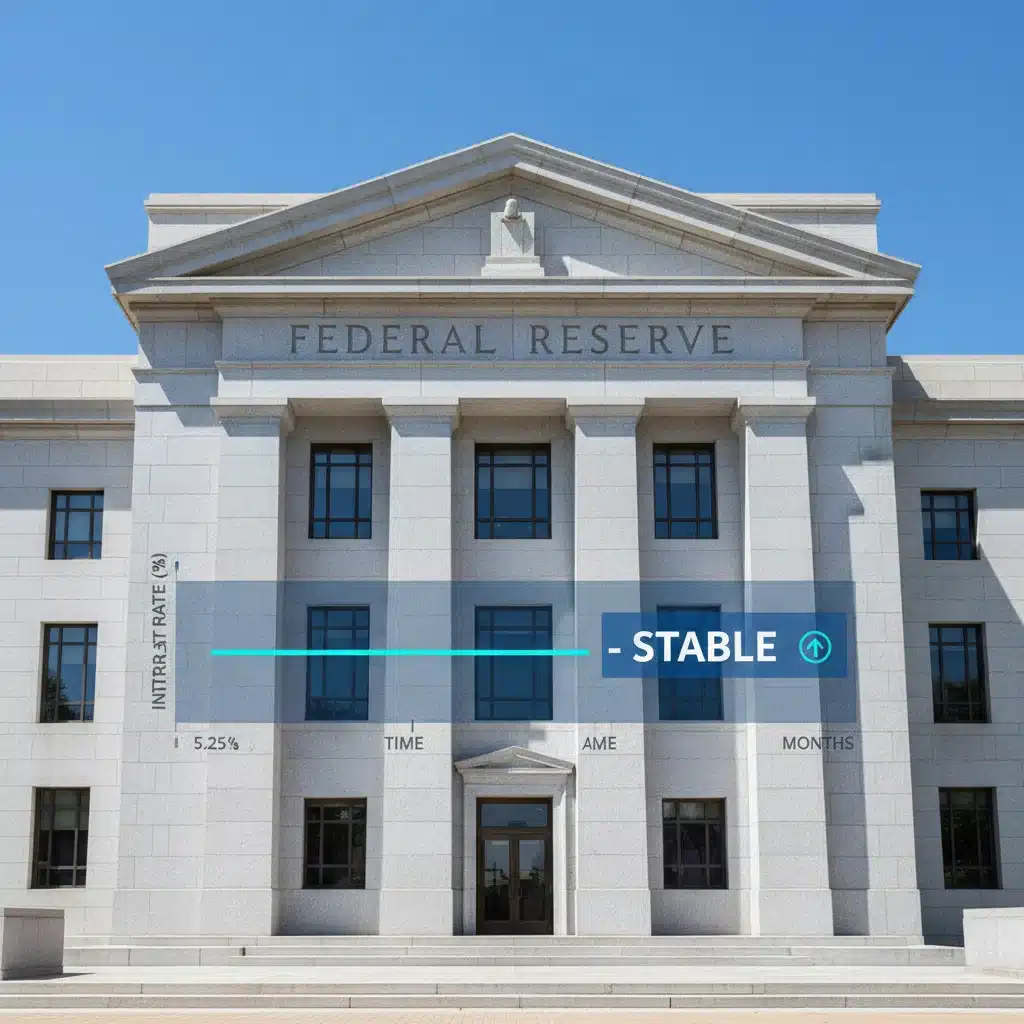
The financial world has once again turned its attention to the Federal Reserve, as the central bank announced its latest decision on interest rates. In a move that was largely anticipated by market analysts, the Federal Reserve has opted to hold its benchmark interest rate steady at 5.25% to 5.50%. This decision, while not a surprise to many, carries significant weight and implications for virtually every aspect of the economy, from the cost of borrowing for individuals and businesses to the broader fight against inflation. Understanding the nuances of this decision, and what it means for your financial well-being, is crucial in today’s economic climate.
The Federal Reserve’s primary mandate is to achieve maximum employment and price stability. In recent years, the latter, price stability, has been particularly challenging due to persistent inflationary pressures. The Fed’s strategy to combat inflation has primarily revolved around aggressive interest rate hikes, beginning in March 2022. This period saw a rapid succession of increases, pushing the federal funds rate from near zero to its current elevated level. The current decision to maintain the Federal Reserve Rates at 5.25% signifies a period of assessment, allowing policymakers to evaluate the cumulative effects of past hikes on the economy.
Understanding the Federal Reserve’s Stance: Why 5.25%?
The decision to keep the Federal Reserve Rates at 5.25% is not made in a vacuum. It is the result of careful deliberation by the Federal Open Market Committee (FOMC), who analyze a vast array of economic indicators. Key among these are inflation data, employment figures, and broader economic growth metrics. The Fed’s assessment suggests that while inflation has shown signs of cooling, it has not yet reached the desirable 2% target. Simultaneously, the labor market, while showing some moderation, remains robust, and economic growth has proven more resilient than initially expected.
By holding rates steady, the Fed aims to continue exerting downward pressure on inflation without unduly stifling economic activity. This ‘wait and see’ approach allows them to gather more data and observe how previous rate hikes fully transmit through the economy. The central bank is essentially balancing the risk of over-tightening, which could lead to a recession, against the risk of under-tightening, which could allow inflation to re-accelerate. The 5.25% Federal Reserve Rates reflect this delicate balancing act.
Anúncios
The Inflationary Battle Continues
Inflation has been a persistent headache for consumers and policymakers alike. While the Consumer Price Index (CPI) and Personal Consumption Expenditures (PCE) index have shown a downward trend from their peaks, they remain above the Fed’s target. The services sector, in particular, has demonstrated sticky inflation, driven by strong wage growth and robust demand. The Federal Reserve’s continued elevated rates are a direct response to this, aiming to cool demand across the economy and bring prices back into line. The hope is that the current Federal Reserve Rates will continue to slow spending and investment, eventually bringing inflation under control without triggering a sharp economic downturn.
Labor Market Resilience
Another critical factor influencing the Fed’s decision is the state of the labor market. Despite higher interest rates, job growth has remained surprisingly strong, and the unemployment rate has stayed historically low. While some cooling is evident, such as a slight increase in unemployment claims and a moderation in wage growth, the market has not shown signs of significant weakening. This resilience provides the Fed with some leeway to maintain a restrictive monetary policy, as a strong labor market can absorb some of the impact of higher borrowing costs. The Federal Reserve Rates are thus seen as a tool to gradually bring the labor market into better balance with the overall economy’s productive capacity, further aiding in the inflation fight.
Anúncios
Impact on Loans and Borrowing Costs
The Federal Reserve’s decision to hold Federal Reserve Rates at 5.25% has immediate and significant implications for various types of loans and borrowing costs for both consumers and businesses. This stability, while a relief for some, also means that the era of ultra-low borrowing costs is firmly in the rearview mirror.
Mortgages: A Continued High-Rate Environment
For prospective homebuyers and those looking to refinance, the sustained Federal Reserve Rates mean that mortgage rates are likely to remain elevated. While mortgage rates don’t directly track the federal funds rate, they are heavily influenced by it, as well as by the bond market. Lenders price their mortgage products based on a variety of factors, including the cost of funds, which is tied to the Fed’s policy rate. Homebuyers can expect to continue facing higher monthly payments compared to just a few years ago. This can cool demand in the housing market, potentially leading to more balanced conditions, but also making homeownership less accessible for some.

Home equity lines of credit (HELOCs) and adjustable-rate mortgages (ARMs) are even more directly impacted by the Federal Reserve Rates. As these products typically have variable interest rates tied to a benchmark like the prime rate (which moves in lockstep with the federal funds rate), borrowers with these loans will continue to experience higher interest payments. This makes budgeting more challenging for those with existing variable-rate debt.
Auto Loans and Personal Loans: Maintaining Higher Payments
The cost of financing a new or used car also remains high with the Federal Reserve Rates holding steady. Auto loan rates have climbed significantly over the past year, making vehicles more expensive to purchase, even with stable sticker prices. Consumers looking to buy a car will continue to face higher monthly payments and greater overall interest paid over the life of the loan. The same applies to personal loans, which are often used for debt consolidation or unexpected expenses. Lenders will continue to offer these loans at rates reflecting the higher cost of borrowing, making careful consideration of necessity and affordability paramount.
Credit Card Interest Rates: Still at Peak Levels
Credit card interest rates are perhaps one of the most directly and quickly affected by changes in the federal funds rate. Since most credit cards have variable Annual Percentage Rates (APRs) tied to the prime rate, the sustained Federal Reserve Rates at 5.25% means that credit card debt remains very expensive. Consumers carrying balances on their credit cards will continue to incur substantial interest charges, making it harder to pay down debt. This environment underscores the importance of minimizing credit card debt and paying off balances in full whenever possible.
Business Loans and Investment: Cautious Optimism
For businesses, particularly small and medium-sized enterprises (SMEs), higher Federal Reserve Rates translate to more expensive capital for expansion, inventory, and operations. This can temper investment plans and slow down hiring, as the cost of borrowing increases the hurdle rate for new projects. Larger corporations with access to capital markets might be less affected, but even they face higher financing costs for bonds and other debt instruments. The stable rate, however, provides some predictability, allowing businesses to plan with more certainty than during periods of rapid rate hikes.
The Broader Economic Landscape and Future Outlook
The Federal Reserve’s decision to maintain Federal Reserve Rates at 5.25% is not just about loans; it’s about steering the entire economy. This move reflects a cautious optimism that the economy is on a path to a ‘soft landing’ – a scenario where inflation returns to target without a severe recession. However, the path forward is fraught with uncertainties.
Global Economic Factors
The U.S. economy does not operate in isolation. Global economic conditions, including geopolitical events, energy prices, and supply chain dynamics, all play a role in the Fed’s calculations. For instance, disruptions in global energy markets can lead to renewed inflationary pressures, potentially forcing the Fed to re-evaluate its stance on Federal Reserve Rates. Conversely, a global slowdown could dampen demand and help bring down inflation, perhaps paving the way for future rate cuts.
Consumer Spending and Confidence
Consumer spending is a significant driver of the U.S. economy. Elevated Federal Reserve Rates can gradually erode consumer purchasing power, especially for those with variable-rate debt. While consumer confidence has shown resilience, persistent high prices and borrowing costs could eventually lead to a pullback in spending, contributing to a broader economic slowdown. The Fed will be closely watching these indicators for signs that its policies are having the desired effect without tipping the economy into a deep recession.

Market Reaction and Investor Sentiment
Financial markets often react sharply to Federal Reserve announcements. The decision to hold Federal Reserve Rates steady was largely priced in, leading to a relatively subdued market reaction immediately following the announcement. However, investor sentiment remains sensitive to any hints about future policy moves. The Fed’s forward guidance, even if subtle, is meticulously analyzed for clues about potential rate cuts or further hikes. A stable rate environment can provide some clarity for investors, but the underlying economic conditions and future expectations will continue to drive market volatility.
What Comes Next? Potential Future Scenarios
While the Federal Reserve Rates are currently stable, the future is never set in stone. Policymakers have consistently reiterated their data-dependent approach, meaning future decisions will be guided by incoming economic data. Several scenarios could unfold in the coming months:
Scenario 1: Prolonged Hold
The most likely scenario, given the current economic backdrop, is a prolonged period of holding Federal Reserve Rates at their current elevated level. This would allow the Fed to observe the full impact of past tightening on inflation and employment. This extended pause would give the economy time to adjust, slowly bringing inflation down to target without a sharp downturn. This scenario implies that the Fed believes the current restrictive stance is sufficient, and patience is key.
Scenario 2: Further Rate Hikes
Should inflation prove more persistent than expected, or if the economy shows signs of re-accelerating, the Fed might be compelled to resume rate hikes. This would mean pushing the Federal Reserve Rates even higher, potentially beyond the 5.25% to 5.50% range. This would be a more aggressive move, indicating that the Fed is prepared to tolerate a greater risk of economic slowdown to achieve its inflation target. Such a move would further tighten financial conditions and increase borrowing costs across the board.
Scenario 3: Rate Cuts
Conversely, if inflation cools more rapidly than anticipated, or if the economy shows significant signs of weakness, such as a sharp rise in unemployment, the Fed might consider rate cuts. Lowering Federal Reserve Rates would stimulate economic activity by making borrowing cheaper, encouraging investment and spending. However, the Fed has been very clear that rate cuts are not on the immediate horizon and would only be considered once there is clear and sustained evidence that inflation is firmly on a path to 2%.
How Individuals and Businesses Can Adapt
Regardless of the Federal Reserve’s future actions, the current environment of stable but elevated Federal Reserve Rates requires strategic financial planning. Here are some key considerations:
For Individuals:
- Manage Debt Wisely: Prioritize paying down high-interest debt, especially credit card balances. Consider debt consolidation strategies if beneficial.
- Review Mortgages: If you have an adjustable-rate mortgage (ARM), understand how future rate changes could impact your payments. If considering a new home purchase, factor in the higher interest costs.
- Boost Savings: Higher interest rates also mean better returns on savings accounts, certificates of deposit (CDs), and money market accounts. Take advantage of these opportunities to grow your emergency fund and other savings.
- Budgeting: Re-evaluate your budget to account for potentially higher costs of living and debt servicing.
For Businesses:
- Capital Expenditure Planning: Carefully evaluate new investments, considering the higher cost of capital. Focus on projects with strong returns on investment.
- Cash Flow Management: Optimize cash flow to reduce reliance on external borrowing.
- Debt Restructuring: Review existing debt and explore options for refinancing if market conditions become more favorable in the future, or if you can lock in a more stable rate.
- Operational Efficiency: Focus on improving operational efficiency to offset higher financing costs and maintain profitability.
Conclusion: Navigating a Stable but Challenging Landscape
The Federal Reserve’s decision to hold Federal Reserve Rates at 5.25% marks a period of cautious stability in monetary policy. While the rapid pace of rate hikes has paused, the economy continues to navigate the challenges of elevated inflation and persistent demand. This environment requires vigilance and adaptability from both consumers and businesses. Understanding the Fed’s motivations, the impact on various financial products, and the potential future scenarios is crucial for making informed decisions.
As the Federal Reserve continues its data-dependent approach, the coming months will provide more clarity on whether the current restrictive stance is sufficient to bring inflation under control without triggering a significant economic downturn. For now, the message is clear: prepare for a sustained period of higher borrowing costs and focus on sound financial management to weather the current economic climate effectively. The stability in Federal Reserve Rates offers a moment to breathe and plan, but also a reminder that the fight against inflation is far from over.